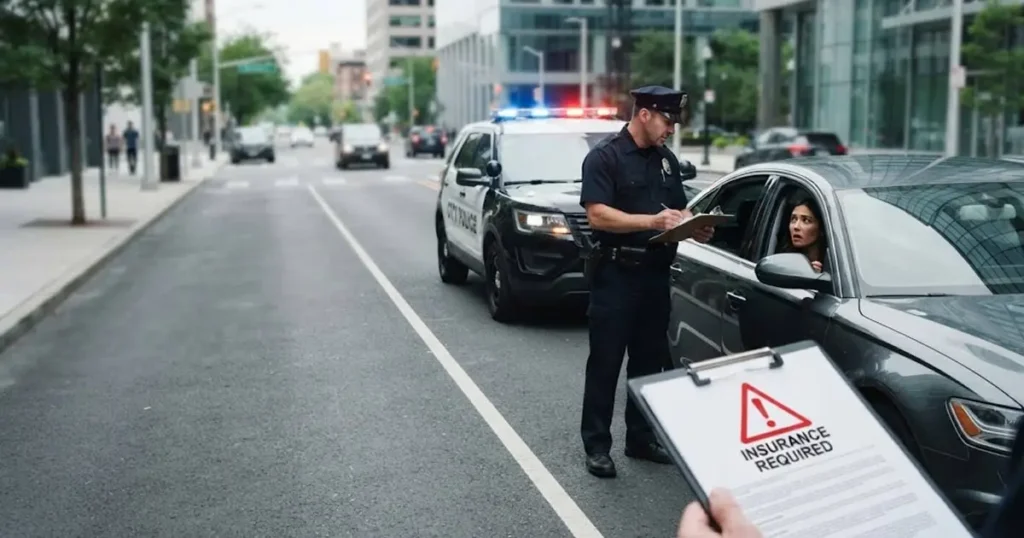

Yes, driving without car insurance is illegal in Virginia. Driving without insurance is now clearly and completely illegal in Virginia as of July 1st, 2024. Before that date, Virginia had a rather unusual law: Drivers could pay an annual fee of $500 to the Department of Motor Vehicles and drive without insurance. This is no longer an option. In Virginia, the ban on uninsured motorist fee will take effect July 2024, and all motorists will be required to have auto insurance coverage or face legal penalties, such as fines and license suspension. That makes Virginia, one of the most recent states in this series to transition from a legally unique permissive system to mandatory insurance in the last two years.
Key Takeaways
- Violations of Virginia’s no-fault insurance law are now a full crime as of July 1, 2024. The former $500 “uninsured motor vehicle” fee to drive an uninsured car has been removed.
- The minimum coverage Virginia requires is 50/100/25, which means $50,000 in bodily injury coverage per person, $100,000 in bodily injury coverage per accident, and $25,000 in property damage coverage. These are some of the highest minimums in the series of all states covered.
- A $600 DMV noncompliance fee, license and registration suspension, SR-22 requirement for three years, and a $145 reinstatement fee are the penalties for driving without insurance.
- In Virginia, it’s a Class 3 misdemeanor to drive without insurance, and you could face a fine of up to $500 for violating Virginia Code Section 46.2-707. It is a Class 2 misdemeanor to give false proof of insurance.
- Virginia has an Electronic Insurance Verification Program that automatically informs the DMV when policies expire or are cancelled.
- One of the strictest liability standards in the country is contributory negligence, which Virginia uses in civil cases. Any fault given to an uninsured driver can prevent any recovery.
- Driving without car insurance is not a criminal offense in Virginia. But if a driver is uninsured and is also engaged in reckless driving, insurance fraud, or a crash that results in serious injury or death, he or she could be arrested.
July 2024: Uninsured Vehicle Fee Ends in Virginia
This is the biggest legal aspect that all Virginia drivers need to be aware of.
Until July 2024, Virginia drivers were able to drive without car insurance and pay a $500 uninsured vehicle fee to the Virginia Department of Motor Vehicles. That law has been replaced by the requirement for insurance, which means it’s illegal to drive without insurance in Virginia. Currently, all drivers are required to purchase at least the state’s minimum amount of liability insurance.
The state did away with the ability to pay an uninsured motorist fee and made insurance a requirement for all registered vehicles on July 1, 2024, to ensure financial responsibility for injuries and property damage in the event of an accident.
The change eliminates the option for any Virginia driver to use the uninsured vehicle fee as a legal alternative to insurance. The only legal option is a valid insurance policy with a minimum coverage of Virginia’s standards.
The Virginia 2025 Minimum Insurance Requirements are changing
The minimum coverage requirements in Virginia also made a change on January 1st, 2025, and are some of the highest mandated minimums in this series.
As of January 1, 2025, a law passed in 2021 is in effect which increased the minimum insurance requirements. All drivers must have at least the minimum coverage required by Virginia DMV. These types of coverage are usually listed as 50/100/25 on the policy.
Minimum limits are $50,000 bodily injury per person, $100,000 bodily injury per accident and $25,000 property damage liability.
This is a 10-fold increase on the previous Virginia minimums of 1/10/1 and more than the minimums in California (30/60/15), Texas (30/60/25) and Ohio (25/50/25). Virginia’s 50/100/25 minimum coverage requirement is one of the most stringent in the nation.
Virginia law states that driving without car insurance coverage is not permitted
In Virginia, not having car insurance coverage can lead to a fine of $600, a requirement to have an SR-22 certificate for three years, and a reinstatement fee of $145 (if applicable to your license, registration, and plates).
The driving without insurance provisions of the Virginia Code are contained in Section 46.2-707. That law provides for the suspension of the driver’s license and the registration certificate and license plates of any person holding an uninsured motor vehicle when the Commissioner receives a record of conviction.
If you are caught driving without car insurance, the Virginia DMV will suspend your driver’s license, vehicle registration and license plates, and you will be charged with a Class 3 misdemeanor and have to pay a $600 noncompliance fee.
Virginia’s Electronic Insurance Verification Program
The Virginia DMV uses an online reporting system, meaning the DMV will be aware of any new or cancelled auto insurance policies, and therefore, if you don’t have insurance or provide false information. The proof of active insurance policy must be submitted within 30 days from date of citation.
Like Florida‘s Online Insurance Verification System and Texas’s TexasSure database, this electronic verification system runs around the clock and automatically. If your insurance company notifies them of lapse or cancellation, the DMV is notified automatically, which may lead to suspension before you get pulled over.
A gap in Virginia law has been closed: No longer can drivers drive without insurance. The DMV can suspend your license and registration without delay if you are stopped by law enforcement or in an accident until you can prove coverage.
The entire penalty structure of the state of Virginia
Class 3 Misdemeanor
This is now a Class 3 misdemeanor. Other than a fine, it’s a serious offense and being convicted of it has other consequences for your future, possibly having to file SR-22s with DMV and other such things.
Virginia fines for Class 3 misdemeanors are up to $500. This definition of a criminal offense is different than in other states such as California and Ohio, where uninsured driving is considered an infraction or administrative violation.
The $600 Noncompliance Fee
If a motor vehicle ultimately is determined to be uninsured, every person who has registered such vehicle and declared it to be an insured vehicle is subject to stiff penalties. DMV suspends all driver’s license, registration certificate and license plates of the owner of the motor vehicle. These are placed in abeyance until the person pays a $600 statutory fee paid to DMV and credited to the Uninsured Motorist Fund and provides and keeps financial responsibility for three years.
The suspension of a license or registration
Your driver’s license will be suspended until you provide proof of insurance and are compliant with all driver’s license reinstatement requirements. The DMV will suspend your vehicle registration and plates, which means that you cannot legally drive your car until you can submit proof of insurance and pay all necessary fees.
SR-22 Requirement
An SR-22 certificate is required for three years and will result in additional penalties if not filed.
The three-year requirement for Virginia’s SR-22 is the same as Texas’s three-year requirement in serious accident situations and is longer than the two-year requirement in some other states.
Class 2 Misdemeanor for False Information
In the event of a car accident, if the police asks for proof of insurance or payment of the fee, not providing proof of insurance or payment of the fee within 30 days of the accident is a Class 2 misdemeanor that may have other repercussions, such as jail time.
Also, in Virginia, it is a Class 3 misdemeanor and has immediate consequences to provide false insurance information.
Does Driving Without Insurance in Virginia get reported to the police?
By itself, driving without insurance in Virginia is not an arrestable offense. Leads to civil fines, suspension, and fees. If, however, an uninsured driver is also guilty of reckless driving, insurance fraud or causing serious injury or death in a crash, he or she can be arrested. It’s a felony to try to show false proof of insurance.
This subtle difference is of great practical importance. When a driver is just uninsured, he or she is not arrested just for not carrying insurance. If a driver commits the violation again, and also commits fraudulent documents or commits a serious injury, he will face criminal prosecution.
A Critical Consideration for Uninsured Drivers – Virginia’s Contributory Negligence Rule
Along with North Carolina and Maryland, Virginia has one of the strictest civil liability standards in the nation, contributory negligence.
Since Virginia is an at-fault state, the at-fault party is financially responsible for the other party’s medical costs and property damage, covered by liability coverage. But if a party desires to file a civil claim against the other party, the party cannot have any percentage of negligence in the accident because of the State’s contributory negligence rules. In a civil case, even if the car accident was just one percent your fault, such as when you were illegally parked when the accident occurred, you will not be able to sue the other party.
This rule has a harsh double effect on uninsured Virginia motorists who are injured in a crash. If you don’t have insurance, you’ll be personally responsible for any damages you cause. Under contributory negligence, if you are in any way responsible for an accident that was caused by another party, then you are no longer entitled to any compensation from them.
All damages are your responsibility. Patients can also file claims for pain and suffering, lost wages, property damage and medical expenses. Wages can be garnished and/or property can be liened.
If you are at fault in an accident without insurance in Virginia, what happens?
If you are an uninsured driver who has been involved in an accident, you could be personally responsible for any damages, and it will be hard to get money after a collision. A car accident does not have to be your fault to lead to penalties if you don’t have insurance.
If a Virginia driver is involved in an accident and is determined to be at fault, he or she could be held liable for damages, injuries, lost wages, mental anguish and more – all without any insurance coverage. The other person will have to cover the cost of their car out of pocket if it is damaged or has to be replaced, hospital expenses, treatment, pain and suffering and all expenses of the accident including your own. If you can’t pay for the accident victim’s damages immediately, you can ask the court to establish a payment plan or garnish your salary.
When should you be complying with the insurance requirements of Virginia?
Drivers may meet Virginia financial responsibility requirements in several different ways, such as by having a standard auto insurance policy from a licensed insurance company, self-insuring companies or individuals with large fleets of vehicles that meet certain financial standards, surety bonds from state-approved providers, and commercial auto insurance policies for rideshare and delivery drivers.
It is convenient to register your auto policy in the state of Virginia through the state’s Electronic Insurance Verification Program. This way, you can avoid any fines or penalties associated with driving without car insurance in Virginia. The steps are easy. All you need to do is submit proof of insurance to the program either online, mailed to the program, or in person at the DMV.
How to Appeal a Virginia Citation for Driving Without Insurance
Appeals from fines are filed with the clerk of the district trial court by filing a Notice of Appeal within 30 days of your judgment in the circuit court. There will be a $50 filing fee as well. If you have been held in custody continuously, the circuit court date must be within five months of the conviction; if not held in custody, the circuit court date must be within nine months of the conviction.
Even if you’re charged with just not having insurance, an attorney can make a significant difference and you may avoid a high fine, such as a $300 ticket, or the charge could be dropped against you entirely.
How Virginia fits into national and state statistics
The state of Virginia has a unique profile with its recently adopted mandatory insurance and the highest minimum coverage requirements in the country, coupled with its contributory negligence civil liability standard.
| Feature | Virginia | Texas | Florida | California | Ohio |
| Insurance mandatory since | July 1, 2024 | Long-standing | Long-standing | Long-standing | Long-standing |
| Minimum coverage | 50/100/25 | 30/60/25 | PIP $10k + PDL $10k | 30/60/15 | 25/50/25 |
| Criminal classification | Class 3 misdemeanor | Civil violation | Non-criminal infraction | Infraction | Administrative |
| Noncompliance fee | $600 | Driver Responsibility surcharge $250/yr x 3 | Reinstatement $150-$500 | N/A | Reinstatement $40-$600 |
| SR-22 period | 3 years | 2-3 years | Varies | N/A (first offense) | 1-3 years |
| Civil liability standard | Contributory negligence | Comparative fault | No-fault PIP | Comparative fault | Modified comparative |
| Jail time possible | Yes (fraud or serious accident) | Yes (serious accident) | Yes (suspended license) | No | No |
Virginia’s 50/100/25 minimum coverage requirement is the highest of the five states in this comparison, and demonstrates Virginia’s dedication to providing substantial financial protection for its accident victims after the uninsured vehicle fee option was eliminated.
Also Read: Is It Illegal To
Expert and Legal Perspectives
In Virginia, the consequences of driving without insurance are direct fines, license and registration suspension, and expensive reinstatement fees. The uninsured motorist fee is no longer an option for drivers and if they are caught, they will now have to deal with legal consequences.
Given the average cost of insurance in Virginia, this type of insurance might seem like a good idea, especially since the average insurance premium for minimum coverage in Virginia is $694 per year as of February 2025 (according to insurance premium data from Quadrant Information Services). If you have an accident, no matter how small, the other party could report you to the state for being uninsured. This could trigger additional penalties such as fines, a license suspension or an SR-22 requirement.
A traffic and misdemeanor defense attorney in Virginia, Andrew Flusche, graduated from the University of Virginia School of Law, says that not having insurance in Virginia is a Class 3 misdemeanor and that even when it’s just a traffic ticket for not having insurance, an attorney can help a lot and the difference between a ticket and a dismissal.
Conclusion
Virginia insurance laws will come into effect on July 1, 2024, and will require all drivers to have insurance coverage. The $500 fee to drive an uninsured motor vehicle has been taken away. The minimum liability coverage for all Virginia drivers is now at the state’s highest standards of 50/100/25.The lowest liability limits in this entire state series are now the highest, set by the state of Virginia at 50/100/25.
Driving without insurance in Virginia has financial, administrative, and criminal repercussions. A single violation is more costly than the average of $694/year for the state’s minimum coverage policy—a combination of the $600 DMV noncompliance fee, three-year SR-22 requirement, license and registration suspension, and Class 3 misdemeanor conviction with a possible $500 fine. Under Virginia’s contributory negligence standard, an at-fault uninsured accident places a greater financial burden on the injured party than would an at-fault insured accident in a comparative fault state, such as Texas, Florida, or California.
The best way to be covered and protected is to keep your coverage as the Virginia minimums (50/100/25), register your policy with the Electronic Insurance Verification Program, and never let your policy expire until your license plates are surrendered to the Virginia DMV.
To find out more about the national law on driving without insurance, check out Is It Illegal to Drive Without Insurance?
Frequently Asked Questions
1. Can you be arrested for driving without car insurance in Virginia?
Yes, as of July 1, 2024. The $500 fee to drive an uninsured motor vehicle has been removed. Everyone who drives in Virginia is required to have minimum liability insurance.
2. What happened in July 2024 in VA?
Virginia has eliminated the uninsured motor vehicle fee option, which enabled drivers to pay $500 a year and legally drive without insurance. As of July 1, 2024, all registered vehicles are required to have liability coverage in effect with the minimum coverage required by the state.
3. What is the minimum insurance requirement in Virginia in 2025?
Effective January 1, 2025, Virginia’s minimum coverage requirements are 50/100/25, which means that coverage for bodily injury is $50,000 per person, $100,000 per accident, and coverage for property damage is $25,000. This is one of the highest required minimums in this series of states.
4. What’s the fine for driving without car insurance in Virginia?
The penalties are a $600 DMV noncompliance fee, license and registration suspension, a requirement for an SR-22 for three years, a $145 reinstatement fee and a Class 3 misdemeanor conviction with a fine of up to $500.
5. Can you go to jail for driving without insurance in Virginia?
Not only for the insurance violation. By itself, driving without insurance is not an arrestable offense. But if the driver’s actions also include reckless driving, insurance fraud or serious injury or death in a crash, then the driver may be arrested.
6. Under Virginia’s contributory negligence law, what happens to uninsured drivers?
Under Virginia’s contributory negligence doctrine, if an uninsured driver is less than 100 percent responsible for an accident in which another party is more than 50 percent responsible then the uninsured driver has no ability to collect damages from the more responsible party. This results in a significant double exposure, that is, personal liability for all damages caused, and no recovery for any damages suffered.