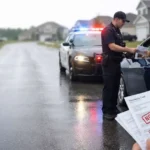

Yes, it is against the law to drive without liability insurance in Tennessee. After an Auto Accident, if you do not present a valid proof of insurance, you could be in immediate trouble with the law. The Tennessee penalty system is unique in this state series in one particular way. The fine for a first offense is a relatively small $300 and is considered a Class C misdemeanor. However, the second an uninsured driver gets into a crash with injuries or fatalities, it becomes a Class A misdemeanor punishable by up to $2500 and almost a year in jail. It is one of the steepest in the state series. Knowing where those limits are is crucial for every Tennessee driver.
Key Takeaways
- Driving without liability insurance is against the law in Tennessee.
- Tennessee’s minimum required coverage is 25/50/25: $25,000 for each injury or death per accident, $50,000 total for injuries or deaths per accident, and $25,000 property damage per accident.
- If a person is required to produce proof of financial responsibility and does not, it is a Class C misdemeanor, punishable by a fine of up to $300 under Tennessee Code Annotated Section 55-12-139.
- If you are involved in an accident and there are injuries or a death, you are liable for a Class A misdemeanor if you are uninsured. You could be fined up to $2,500 and receive up to 11 months and 29 days in jail.
- Tennessee has an Electronic Insurance Verification System which tracks coverage on an on-going basis and informs the Department of Revenue when a registered vehicle is uninsured.
- While you won’t be sent to jail in Tennessee for driving without insurance, you’ll still have some serious consequences, including license and registration suspension.
- Tennessee has a modified comparative fault system. If the driver was partially responsible or at fault, they can recover damages if they are less than 50 percent at fault. They are unable to claim any recovery if it is 50 percent or higher.
Under Tennessee law, it is illegal to drive without insurance coverage
The Financial Responsibility Law is violated if you drive without insurance in Tennessee. Drivers are required to have a minimum of $25,000 per person, $50,000 per accident, and $25,000 for property damage.
The Financial Responsibility Law is recognized by Tennessee law as T.C.A. Section 55-12-101 et seq., and mandates that drivers have liability insurance or another form of financial responsibility, including a surety bond or self-insurance.
Not having car insurance is not the same as not being able to provide proof of car insurance. Without insurance, or unable to show proof of insurance when stopped for a traffic violation or at an accident scene, you will be subject to an administrative violation, like a seat-belt ticket. If you can present documentation to the court that proves that you are insured on the date of your citation and before your court date, your citation may be dismissed in Tennessee.
This difference is real-world. If a driver has insurance but doesn’t have their policy card, they are in a manageable situation. If the driver is really uninsured, then they will be subject to the entire class C misdemeanor penalties.
The primary legal document is Tennessee Code Annotated Section 55-12-139
Tennessee Code Annotated Section 55-12-139 makes it a Class C misdemeanor to not provide proof of financial responsibility if required. The statute also allows the police to tow the vehicle under agency policy, and if the department is notified of a conviction, the driver’s license can be suspended until the conditions for reinstatement are met. These penalties are in effect even if there is no accident, and a routine traffic stop can lead to suspension.
Tenn. law requires that all drivers have insurance. Code Ann. Section 55-12-139 is a Tennessee traffic violation/infringement. Fines, suspension of driving and vehicle registration, and the need to obtain an SR-22 certificate for future financial responsibility are all penalties.
EIVS is Tennessee’s Electronic Insurance Verification System
With Tennessee’s Electronic Insurance Verification System, drivers without proper auto insurance or other form of financial responsibility will be sent a notification from the Department of Revenue. If you don’t comply with the notice and obtain the required auto insurance coverage or other means of financial responsibility, more notices will be sent and you may be fined and your vehicle’s registration will be suspended.
Tennessee is a model of the Insurance Industry Committee on Motor Vehicle Administration to ensure that drivers are insured. If state officials are alerted that a registered vehicle isn’t insured, the Tennessee Department of Revenue will send a notice to the owner. If you get that notice, you will need to respond within 30 days and provide proof that you carry insurance or you’ve purchased a policy. If you do, your charges will be dropped, but you’ll have to pay a $25 coverage failure fee within 30 days. The state will impose a $100 fine and revoke your driver’s license and registration if you don’t. If so, you will have to pay a $50 charge for an SR-22 certificate and a $65 charge to restore your driving privileges.
Full Tennessee Penalty Structure
First Offense: Class C Misdemeanor
The first offense is a Class C misdemeanor, with a fine of $300. Until you provide proof of liability insurance and pay all fees, your driver’s license will be suspended. In some instances, the driver’s test may have to be retaken. There will be a suspension of registration of your vehicle. This suspension is usually revoked upon payment of a reinstatement fee. The responding officer may legally be able to tow your vehicle from the scene. An SR-22 form, a proof of financial responsibility, may be required.
The fees associated with a first offense are $25 coverage failure fee (if the Department of Revenue notice is answered within 30 days), $50 SR-22 certificate fee, and $65 license reinstatement fee.
Accident – Injury or Death: Class A Misdemeanor
It is the most serious and important step up in Tennessee’s uninsured driving system.
Uninsured and involved in an accident that causes injury or death, you will be charged with a Class A misdemeanor. You could be fined up to $2,500 and jailed up to 11 months and 29 days if you are found guilty. You’re also responsible for covering any medical and repair bills, out of pocket, that stem from the accident.
The offense is a Class A misdemeanor in Tenn., punishable by up to $2,500 in fines and up to 11 months and 29 days in jail. Code Ann. Section 55-12-139.
This is one of the most dramatic jumps in penalties in this entire state series, from a $300 class C misdemeanor to a potential $2,500 fine and almost a year in jail. In comparison, a driver in Texas only gets jail time if they cause serious injury or death. Tennessee is exposed to Class A misdemeanor charges whenever any injury or death is sustained in an accident with an uninsured driver, whether the case is won or lost.
Repeat Offenses
Penalties will get more severe if you are caught driving without insurance again. This may result in increased fines, extended suspensions and even jail time.
SR-22 Requirement
Other Tennessee insurance penalties for driving without car insurance involve the need to obtain an SR-22 for three years. The SR-22 filing requirement places a legal obligation on your insurance company to inform the state if your coverage lapses during the filing period, and means that your compliance is under constant monitoring for three years after conviction.
In Tennessee, can you get in trouble for driving without car insurance?
You may not be arrested for driving without car insurance in Tennessee, but you could have other serious penalties like license and registration suspension.
The basic rule applies to the first offense. Things look very different in case of an accident.
It’s bad enough to drive without insurance, but if you are involved in an accident and cause injury or death without insurance, you are facing a Class A misdemeanor. The maximum fines are $2,500 and imprisonment up to 11 months and 29 days if convicted.
In Tennessee, not paying fines may incur more penalties, such as late fees and even a warrant for your arrest.
Tennessee’s Modified Comparative Fault System: How It Affects Uninsured Drivers
For Tennessee drivers who are not insured, it’s crucial that they understand the civil liability system in the state.
In Tennessee, the application of a modified comparative negligence system is in effect. Code Ann. Section 20-1-119. This also means that if the driver is partially responsible for the accident and their portion of the responsibility is less than 50 percent, then they can recover damages. If it is 50 percent or higher, they will not be able to make any recovery claims.
This modified comparative fault standard is similar to the one in Ohio and Texas, and much more favorable than Virginia‘s contributory negligence standard, under which there is no recovery if there is one percent fault.
The civil liability for driving without insurance is not removed by the modified comparative standard.
If a driver is not insured and is responsible for a car accident, medical expenses, lost wages, and property damage are not extinguished. Rather, the injured party will typically try to collect damages from the negligent driver. The cost of medical care following a crash can be in the thousands of dollars. If a driver does not have liability insurance, he or she may find their assets seized or wages garnished following a civil judgment.
What is the consequence of driving without car insurance and causing a car accident in Tennessee?
In Tennessee, if you are involved in an accident while driving without car insurance, you will be held liable for the penalties for driving without car insurance, regardless of who is at fault. Driving uninsured can make it difficult to be compensated for damages if you are not at fault and can have long-lasting and life-changing consequences if you are at fault. Besides the legal penalties for driving without insurance, you may easily find yourself liable for damages to your car, the other driver’s car repairs and hospital expenses, and your medical care. If the other driver doesn’t have uninsured motorist coverage or personal injury protection, you may end up owing money or even bankrupt.
If you are determined to be at fault for the accident, you could be liable to others for damages. This may lead to substantial damages such as medical expenses, repair costs of the car, loss of wages and damages for pain and suffering. If you are injured in an Auto Accident and don’t have insurance, you will most likely be on your own for paying your own expenses.
The impact of DWIA on future insurance rates in Tennessee
Having a conviction for driving without insurance on your record can be a red flag to insurance companies. Uninsured driving is seen as a risk factor by most insurance companies. Consequently, they could raise your rates sharply or refuse coverage altogether.
If you have a gap in coverage, that means there may be a possibility of a claim in the future, which will increase the cost of your insurance policy. Additionally, if you end up being caught driving without coverage, especially if it isn’t your first offense, some insurance companies will consider you a high-risk driver.
The average cost of the minimum coverage in Tennessee is $1,046 annually. It’s nothing compared to the repercussions of driving without insurance, particularly if you are involved in an accident.
The State of Tennessee is compared to other states
The escalation system from Class C to Class A misdemeanor is unique for Tennessee.
| Feature | Tennessee | Virginia | Texas | Florida | Ohio | California |
| First offense classification | Class C misdemeanor | Class 3 misdemeanor | Civil violation | Non-criminal infraction | Administrative | Infraction |
| First offense fine | Up to $300 | Up to $500 | $175-$350 | $150-$500 | Up to $500 | $100-$200 base |
| Accident with injury | Class A misdemeanor | Escalating | Misdemeanor | Yes (suspended license) | No jail | No jail |
| Max fine with injury | $2,500 | N/A | $4,000 | N/A | N/A | N/A |
| Max jail with injury | 11 months 29 days | N/A | 1 year | N/A | N/A | N/A |
| SR-22 period | 3 years | 3 years | 2-3 years | Varies | 1-3 years | N/A (first) |
| Negligence standard | Modified comparative (50% bar) | Contributory (1% bar) | Comparative | No-fault PIP | Modified comparative | Comparative |
| Minimum coverage | 25/50/25 | 50/100/25 | 30/60/25 | PIP $10k + PDL $10k | 25/50/25 | 30/60/15 |
One of the most obvious and unambiguous escalation steps in this series of states is Tennessee’s Class A misdemeanor exposure limit for accidents with injuries or fatalities.Tennessee’s Class A misdemeanor exposure for accidents with injuries or death is one of the easiest-to-find and most direct escalation steps in this series of states. Tennessee’s accident scenario has a jail exposure nearly 12 months in duration, whereas accident scenarios in Ohio and California have no jail exposure for any uninsured driving scenario.
If you are caught driving without insurance in Tennessee, here are some steps to take
When uninsured drivers are caught, it’s important to act fast to limit the potential impacts and do what you can to fix the problem. The most important first step is to obtain an auto insurance policy that covers the minimum amount of insurance required in Tennessee. Having coverage as soon as possible will allow you to start dealing with any penalties or legal matters.
If you have been issued a ticket or citation for driving without insurance, it’s important to pay any fines promptly. If you don’t pay your fines in Tennessee, you may face more fines, late fees, and even a warrant for your arrest.
You may need to come to court depending on the case’s situation. If yes, it is best to consult an experienced criminal defense attorney who may be able to present the case, possibly secure a plea reduction, or attempt to have charges dropped, depending on the circumstances.
Also Read: Is It Illegal To
Expert and Legal Perspectives
At Hughes and Coleman Injury Lawyers, they have witnessed the consequences of Tennessee’s penalties for noncompliance and nonaccountability, and those who are caught off guard could find themselves in more than just a financial dilemma. The clarity of the law and proactive steps can go a long way to how these situations play out.
Nashville car accident lawyers have seen the serious financial exposure that can occur when someone drives without insurance in Tennessee, which is in violation of the Financial Responsibility Law.
According to Tennessee law, all drivers must have liability insurance coverage. If you’re uninsured, you’re on your own for any expenses related to the accident. In simple terms, you might find yourself in court for any assets you might own or any money you have saved, even future earnings.
Conclusion
Tennessee requires drivers to have liability insurance. The penalty structure is outlined in Tennessee Code Annotated Section 55-12-139 and the state’s Electronic Insurance Verification System automatically notifies the Department of Revenue of any vehicles that are not insured.
There are two types of penalties in Tennessee. A first offense is a Class C misdemeanor with a fine of up to $300, license and registration suspension, vehicle towing and a three year requirement for an SR-22 form. A Class A misdemeanor, with fines of up to $2,500 and a prison sentence of up to 11 months and 29 days, is the penalty if you are uninsured and sustain an accident that leads to injury or death. That escalation trajectory is one of the biggest in this entire state series.
The average yearly cost of the minimum coverage in Tennessee is $1,046. This is nothing in comparison to the repercussions of driving without insurance, particularly when having an accident. It’s best to have 25/50/25 coverage continuously, have proof with you at all times, and act immediately if the Department of Revenue mails an insurance verification notice.
To learn more about driving without insurance, check out Is It Illegal to Drive Without Insurance?
Frequently Asked Questions
1. In Tennessee, does it matter if you do not have insurance?
Driving without liability insurance is illegal in Tennessee. The Financial Responsibility Law of Tennessee requires all drivers to have at least 25/50/25 coverage at all times.
2. How much will it cost to drive without insurance in Tennessee?
The refusal to submit proof of financial responsibility when it is required is a Class C misdemeanor, with a monetary penalty of up to $300.00, under Tennessee Code Annotated Section 55-12-139.
3. In Tennessee, do you risk going to jail for driving without insurance?
While you may not be sentenced to jail for driving without insurance in Tennessee, you can encounter other serious penalties, including license and registration suspension. But if you are uninsured when you get into an accident and someone is injured or killed, you will be charged with a Class A misdemeanor and fined up to $2,500 and have up to 11 months and 29 days in jail.
4. What if you have no insurance and cause a car accident in Tennessee?
If you are determined to be responsible for the accident, you could be held liable for damages by others. This can lead to substantial monetary damages such as for pain and suffering, lost wages, vehicle repair expenses, and medical expenses.
5. How does Tennessee’s modified comparative fault system impact uninsured drivers?
Under Tenn., Tennessee has a modified comparative negligence system. Code Ann. Section 20-1-119. If the driver is partially responsible for the accident, the person can receive compensation if he or she was not more than 50 percent at fault. They can’t make any recovery claims if it’s 50 percent or higher.
6. What is the lowest coverage that Tennessee requires?
The Financial Responsibility Law in Tennessee requires that drivers have a minimum liability limit of $25,000 for each injury or death that occurs in an accident, plus $50,000 for each death or injury in an accident, and $25,000 for property damage per accident.