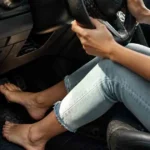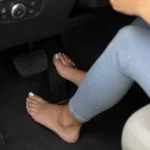

No, it is not against the law to drive with bare feet in Maryland. No laws exist in any of the 50 states including Maryland, which require drivers to wear footwear when driving. The police officer cannot stop you because of the lack of shoes, and no ticket can be given on that ground only. What makes Maryland different to most other states is not how it approaches the issue of barefoot driving itself, but the harshness of the civil liability consequences that follow in case it is found that the issue of barefoot driving itself was indeed the cause of an accident. Maryland is one of but few states which still apply the doctrine of pure contributory negligence, under which even a single percent of the fault which is attributed to you will destroy your right to recover any compensation whatsoever. That is the law that every barefoot driver in Maryland has to know.
Key Takeaways
- In Maryland, it is not unlawful to drive without footwear. The Maryland Transportation Code does not specify any footwear requirement of the driver of a passenger vehicle.
- However, contrary to popular opinion, it is not illegal to drive barefoot in Maryland. In fact, it is not unlawful in all the 50 states. As long as you are driving your car safely, there are no laws concerning what you should wear when driving in Maryland.
- Maryland has one of the most punitive civil liability regulations in the nation. In Maryland, when it is found that you are even partially at fault (so-called contributory negligence) you may not be able to recover any damages to your injuries.
- Although it is not a crime to drive with bare feet in Maryland, there are laws that regulate reckless and negligent driving. In case driving with bare feet is one of the causes of a car crash, you may be accused of reckless or negligent driving.
- Provided that you are found even 1% to be to blame in your car accident, then you have the possibility of recovering absolutely nothing under your claims to compensation.
- Why is it against the law to drive barefoot? It is not. One of the driving myths that have consistently been debunked in the country is the belief that it is illegal.
What the Maryland Law says about Barefoot Driving
The traffic laws of Maryland are regulated by the Maryland Transportation Code, Title 21, which is the vehicle laws and rules of the road. That code does not say anything at all on the particular question of driver footwear.
Maryland does not consider driving with bare feet as an offense. No particular state legislation exists to prevent people to drive barefoot. It is not illegal, however, there are considerations that should be taken into account.
However, contrary to the common belief, it is not illegal to drive with bare feet in Maryland. In fact, it is not illegal in any of the 50 states. There are no laws as to what footwear is acceptable when driving a vehicle within the state of Maryland as long as you are driving your vehicle safely.
The fact that the Maryland Transportation Code does not mention footwear is in line with the national standard. There is also no federal law that discusses driver footwear. The legal system in Maryland, as in any other state, is concerned with the behavior of drivers and control of vehicles. A driver who drives safely, keeps the lane discipline and does not cause an incident will not be subjected to any legal action irrespective of the kind of shoes they are wearing.
Why Do People believe that it is illegal to drive with bare feet?
It is among the most often-posed questions on this subject, and it is worth a straightforward answer.
The rumor about barefoot driving being illegal is so widespread that it is among the most popular driving rule questions that the residents of Maryland are asking Google. Probably, the first thing that people began to think was that driving in flip-flops or even barefoot was illegal because it just seemed like it would be dangerous. After all, the majority of laws are implemented to prevent individuals to do something that may put themselves and others in danger.
In 1990s Jason Heimbaugh attempted to resolve the ambiguity surrounding the laws of barefoot driving in the United States by calling the department of motor vehicles of all 50 states. The states all affirmed that you can drive barefoot because it is not regarded as a crime.
The study is over 30 years old. It has been resolved at the official level since the mid-1990s. What still circulates in Maryland and all around the nation is informal safety advice that has been repeated so many times, and over so many years, that many people have mistaken it, and still do, as being the law. It is not. The law is permissive. The safety issues are factual, but are not legally enforceable when there is no unsafe driving conduct.
Is Barefoot Driving in Maryland enough to Be Pulled Over or Ticketed?
No. There is no statutory power of the law enforcement officers of Maryland to stop or cite a driver on the basis of the lack of footwear.
If you prefer to drive without wearing shoes, you can do so in Maryland without fear of a traffic ticket.
The legal risk is identified particularly when the unsafe vehicle operation is related to barefoot driving. The traffic laws of Maryland contain certain clauses on reckless and negligent driving, which come into play in that case.
According to the code, reckless driving happens when the individual is driving a vehicle with a willful or wanton disregard to the safety of others or property or in a manner that indicates a willful or wanton disregard to the safety of others. Negligent driving could be applicable in cases where the individual drives a motor vehicle in a foolish or careless way that poses a threat to others or property.
The police might present that your driving was careless or negligent in case they can prove that an accident was somehow caused by driving with bare feet.
Some of the potential charges that may be filed against unsafe driving due to barefoot in Maryland include:
- Negligent driving
- Reckless driving
- Loss of control of the vehicle.
- Civil liability to damages and injuries to other parties.
The Contributory Negligence Rule of Maryland: The most important legal issue to consider
It is the most significant legal fact to every Maryland driver and the one that most significantly distinguishes the state among most of the rest of the country.
In Maryland, when you are found to be even slightly at fault, called contributory negligence, you may not be able to recover any compensation on your injuries. Even such a seemingly insignificant act as driving with bare feet can have serious legal implications.
When you are proved to be even 1 per cent to blame in your car accident, you have the possibility of recovering under your claims of compensation absolutely nothing. The rules may apply in cases where the police file a claim that your driving was careless or negligent.
The doctrine of pure contributory negligence, which is one of the most stringent civil liability standards in the country, is applied by Maryland. The majority of states apply some type of comparative negligence, which proportionately cuts down on the recovery of a claimant but still permits recovery. Maryland does not. A driver who is found at least partly responsible of contributing to an accident by driving with bare feet loses all claim to damages, no matter how much fault the other party may bear.
Unlike Maryland, most other states apply comparative negligence rules whereby an injured party has a right to recover due to a partial fault. It is here that there is a real difference. It stresses how much local expertise is integral to car accident claims in Maryland.
Four states and the District of Columbia continue to use this doctrine; Maryland, North Carolina, Alabama, and Virginia. This has the implication to the Maryland drivers, that, although barefoot driving is not illegal at all, it presents a civil liability risk that is more severe than in the 46 other states.
The impact of Barefoot Driving Affects on Insurance Claims in Maryland
Outside of court, the issue of barefoot driving may have a significant impact on the way that Maryland insurance companies handle claims, even in cases where no citation was given.
In case the at-fault party insurance company takes it against you to reject your claim, you were driving with bare feet.
In addition, among the insurance adjusters and jurors, there is a wide range of perception of negligence, and it is important to consider the possible implications of driving barefooted. In other instances, it can be considered as reckless behavior, which erodes your credibility and reduces your likelihood of getting fair compensation.
Barefoot driving questions evidence has the greatest role to play in a car accident case. As an example, skid marks, dash camera footage, or any eyewitness testimony can be used to determine whether the driving involved in the accident was by a barefoot driver.
The Maryland insurance adjuster operates under a legal system that enables him to increase contributory negligence as an absolute bar to recovery. This implies that when barefoot driving is brought to the fore successfully as a contributing factor, it does not simply diminish your claim. It gets rid of it completely. This result is more predictable in the country by no other negligence system than the contributory negligence doctrine.
Barefoot Driving Does Not Fall under the Medical Emergency Exception
It is a legal aspect that is specific to Maryland and thus needs special attention.
To avoid liability in cases where an accident is caused by a sudden, unexpected medical condition, medical emergency defenses may be used. But driving with bare feet does not qualify under this exception, even in cases where you are in a hurry to get to the emergency room. In the event that the driver had the accident that led to injuries due to the fact that the driver had bare feet slipping off the pedals, he or she will still be liable to the damages caused even though their reasons were noble. When you are in need of medical attention but you have to do it now, then it is always good to call an ambulance.
It is a significant legal demarcation. A motorist who claims that emergency conditions justified his/her barefoot driving at the time of an accident cannot use the medical emergency defense to avoid liability. The barefoot option is a potentially contributory factor no matter how urgent the situation is.
The comparison of Maryland with other states
The legal stance of Maryland is in line with the national standard on the issue of the legality of barefoot driving, but its contributory negligence doctrine makes it one of the strictest states in terms of exposure to civil liability.
| State | Barefoot Driving Legal | Negligence Standard | Key Distinction |
| Maryland | Yes | Contributory (1% fault = full bar) | One of only 5 jurisdictions with pure contributory negligence |
| North Carolina | Yes | Contributory (full bar) | Same strict contributory standard as Maryland |
| Alabama | Yes (cars) | Contributory (full bar) | Also bans barefoot motorcycle riding |
| Maine | Yes | Modified comparative (50% bar) | Distracted driver law applies if barefoot causes accident |
| Utah | Yes | Modified comparative (50% bar) | Highway Patrol explicitly recommends shoes |
| Missouri | Yes | Pure comparative | State formally condemns barefoot driving as unsafe |
| Iowa | Yes | Modified comparative (50% bar) | State formally condemns barefoot driving as unsafe |
| Indiana | Yes | Modified comparative (50% bar) | State formally condemns barefoot driving as unsafe |
| Arizona | Yes | Pure comparative | Explicitly identified reckless driving risk state |
| Georgia | Yes (cars) | Modified comparative (50% bar) | Motorcycle barefoot riding prohibited |
| Ohio | Yes | Modified comparative (51% bar) | BMV advises against barefoot driving |
| California | Yes | Pure comparative | Reckless driving charges possible after accident |
| Oklahoma | Yes | Modified comparative (51% bar) | No formal position |
| Florida | Yes | Pure comparative | No formal position |
| Michigan | Yes | Modified comparative | No formal position |
| Texas | Yes | Modified comparative | No formal position |
| Illinois | Yes | Modified comparative | No formal position |
| Tennessee | Yes | Comparative | Local municipal ordinances may apply |
The contributory negligence standard of Maryland is the characteristic feature of the legal regulations of barefoot driving in Maryland. It is worse than the modified comparative systems employed by most of the other states in this series and makes Maryland and North Carolina and Alabama the states where barefoot driving has the greatest civil liability risk in the country.
Is Barefoot Driving Safe? An Honest Assessment
Legal question and safety question are two different issues. Maryland also allows driving barefoot. The question of whether it is advisable or not is dependent on the conditions and the driver.
Genuine Risks
Bare feet are more likely to slip off the pedals and this will greatly reduce your control of the vehicle especially when it comes to making sudden maneuvers. This loss of grip may be especially hazardous during an emergency, when every second matters.
The braking power of your bare feet may not be sufficient to halt your vehicle before it is too late. As you are changing gears your bare feet could slip and slide off the gas or brake pedals or the clutch and cause you to lose control of your car and crash.
Other dangers that are unique to the driving conditions in Maryland are:
- Coastal and beach driving: Maryland Chesapeake Bay coastline and Ocean City beaches are subject to heavy traffic during the summer season. Wet, sandy foot drivers returning to the road after water sports activities are an example of a high-risk barefoot driving situation, especially in light of the contributory negligence rule in Maryland.
- Urban traffic: Baltimore and the DC metro corridor require frequent, accurate braking, and pedal reliability is of critical importance.
- Winter conditions: Maryland winters are characterized by ice and snow which makes barefoot drivers less sensitive to their feet and less reliable in braking.
- Long-distance commuting: Maryland is located on a large transit route along the East Coast. Foot fatigue without shoe support occurs due to extended interstate driving.
In the case where Bare Feet May Be Preferable
Others say that when you drive with bare feet you can better regulate the speed, agility and braking of powerful vehicles. Safety professionals also always find some kinds of footwear to be more hazardous than no footwear at all.
The risk comparison of footwear below is based on the overall safety agreement:
| Footwear Type | Pedal Control | Risk Level |
| Barefoot | Moderate | Medium |
| Flat sneakers | High | Low |
| Flat sneakers | High | Low |
| Flip-flops | Low | High |
| High heels | Very low | Very high |
| Heavy boots | Low-Moderate | Medium-High |
| Sandals | Low | High |
When Barefoot Driving Is Best Avoided in Maryland
In even those states where it is legally allowed, certain conditions of Maryland driving make barefoot driving a particularly bad practical decision:
- Following visits to beaches or bays: Wet, sandy feet returning to the coast or Chesapeake Bay regions represent the highest risk of slippage and the most probable foundation to make a contributory negligence determination following an accident.
- Traffic on Baltimore and DC corridors: Urban high-density driving requires steadfast and prompt pedal action.
- Weather in winter: Ice and cold weather make foot sensitivity and braking reliability less on the roads in Maryland.
- Long interstate drives on the East Coast: Foot fatigue is accumulated without shoe support during long interstate trips across the major highway systems in Maryland.
- Roads in rural Eastern Shore: Unpredictable conditions and variable surfaces demand dependable and accurate pedal operation.
Expert and Legal Viewpoints
The lawyers at WGK Personal Injury Lawyers, a personal injury law firm with headquarters in Baltimore, confirm that barefoot driving is not a criminal act at all in Maryland and that no one can be cited with it alone. Their published instructions specifically caution that in the event that driving barefoot is a factor in the cause of a car accident, a driver may be charged with reckless or negligent driving and that anyone who is injured because of such an accident may file a personal injury lawsuit. They recommend that one should immediately seek the services of an experienced attorney after any accident that has occurred due to barefoot driving.
Lawyers at Rice Murtha and Psoras, an established Maryland car accident litigation firm that has offices serving Ocean City and the state at large, confirm that the contributory negligence rule of Maryland is the determining legal factor of barefoot drivers in the state. Their published guidance advises that because wearing footwear is the more widespread practice, it is hard to tell what a judge or jury may ultimately decide regarding barefoot driving, and that contacting an experienced car accident lawyer is important to anyone whose barefoot driving is raised as a contributory factor in a car accident claim.
FindLaw, a national legal reference resource, reports that traffic laws in Maryland are based on the behavior of drivers and the responsibility to drive safely, with no statutory reference in Maryland to footwear. Their discussion confirms that contributory negligence doctrine is the most consequential legal consideration of barefoot drivers in Maryland and that seeking legal advice of a traffic attorney is advisable to anyone cited or sued in the aftermath of a barefoot-related accident.
Also Read: Is It Illegal To
Conclusion
In Maryland, it is not illegal to drive with bare feet. The Maryland Transportation Code has no footwear requirement of drivers of passenger vehicles, no officer has the legal power to cite you to barefoot driving in passenger cars, and no state in the country has a law prohibiting barefoot driving in passenger cars. The myth that driving without shoes is illegal is among the most common and well-debunked driving myths, and Maryland is no exception to the national legal consensus.
The only thing that makes Maryland truly unique is its pure contributory negligence doctrine, one of the strictest civil liability standards in the country. By that rule, any finding that barefoot driving was at all a contributing cause to an accident, can annul your right to recover any compensation whatever. It is not a hypothetical risk. Contributory factors to deny or minimize claims are actively raised by insurance adjusters in Maryland, and barefoot driving provides them with a ready argument in any case where the issue of pedal control arises.
The most convenient and legally safeguarding practice in Maryland is the easiest. Always have a good, reliable pair of flat, closed-toe driving shoes in the car. In a state where one per cent of fault may cost you all, the removal of an unnecessary liability factor is not only prudent. It is essential.
Frequently Asked Questions
1. Can one be prosecuted in Maryland as an illegal driver because of driving barefoot?
No. The Maryland Transportation Code does not have any clause that would forbid driving with bare feet. It is completely legal to all drivers who drive ordinary passenger cars in the state.
2. What do people mean when they say that it is illegal to drive with bare feet?
It is not a law but a belief based on safety warnings that have been repeated across generations. In 1990s, Jason Heimbaugh verified by calling all 50 state DMVs that barefoot driving is legal in all states. The myth has remained since safety guidance has been confused with legal ban.
3. Does a state in which one drives with their feet bare have a law that is illegal?
No, in the case of passenger car drivers. None of the U.S. states has an anti-barefoot-driving law in the regular passenger cars. Alabama and Georgia are the only states that have certain footwear requirements, and both are only applicable to motorcycle riders.
4. What is the impact of the contributory negligence rule in Maryland on barefoot drivers?
According to the pure contributory negligence doctrine of Maryland, in case the driving with bare feet is proved to have contributed to an accident at all, and even by one percent, you are not allowed to recover any compensation whatsoever. This is one of the highest standards of civil liability in the country and is only applicable in five jurisdictions in the country.
5. Does a barefoot driving against me in Maryland have any chance of being used by an insurance company?
Yes. Insurers are actively increasing contributing factors to deny or cut claims in Maryland. Driving barefoot, in case this is considered to have been a contributory cause of an accident, can be invoked to invoke the contributory negligence doctrine and deny your claim altogether.
6. Does driving in bare feet in Maryland make it safer than driving in flip-flops?
In many cases, yes. Flip-flops may fall off or get stuck under pedals, posing a more immediate threat than bare feet in most situations. But, with the contributory negligence rule of Maryland, flat closed-toe sneakers with rubber soles are, by all means, the safest and most legally protective shoes that all Maryland drivers should wear.