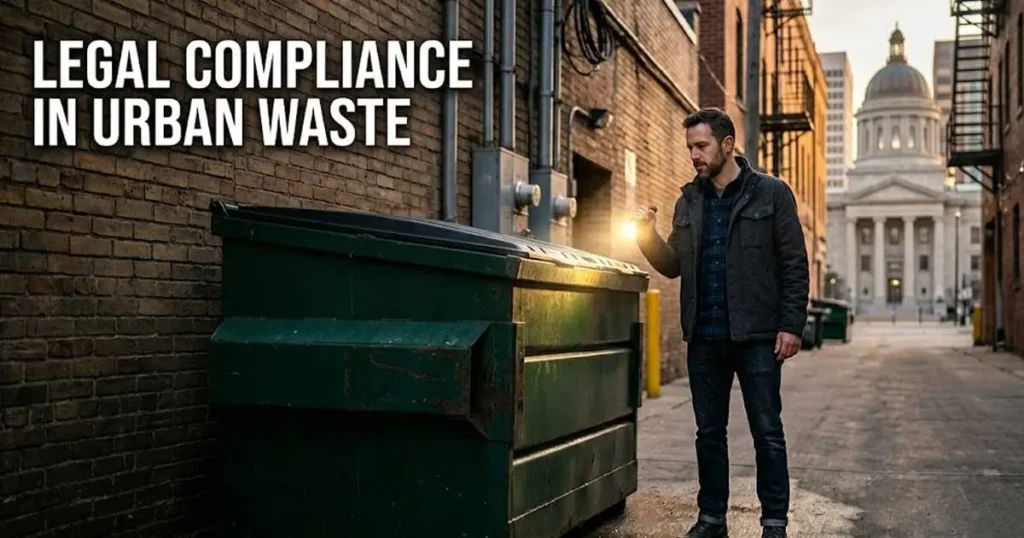

No, it is not a state law in Texas that it is illegal to dumpster dive. Dumping your trash in Texas is OK if it is done on public land. Instead, it is not legal to dive into a dumpster on private property without permission from the property owners or renters. Trespassing charges could be filed if dumpster diving occurs without permission. The most critical legal decision a Texas dumpster diver can make is whether the property is public or private property. In most of the urban and suburban areas of Texas, however, the legal permission is the exception, and most of the dumpsters that contain items of value are located on private commercial property.
Key Takeaways
- Texas state law does not prohibit dumpster diving. The Texas Legislature has not passed any laws prohibiting dumpster diving.
- Dumpster diving in Texas is generally OK when the garbage is in a public place and not on private property without permission.
- A person commits an offense if he enters or remains on or in the property of another without effective consent. (Texas Penal Code §30.05) This is the main law that renders most commercial dumpster access illegal in Texas.
- A person may use force but not deadly force to stop a mere trespass or interference on property under the Texas Penal Code Section 9.41. Texas has clear law giving property owners the right to eject trespassing dumpster divers.
- Scavenging is more tightly regulated in cities such as Austin and San Antonio. Others, such as Houston, are more property and trespass oriented.
- In Texas, dumpster diving may be considered disorderly conduct when someone dumpster dives in a public place and law enforcement is called or someone complains.
- Is it against the law to dumpster dive at Sephora in Texas? The majority of Sephora stores are on private commercial property. If you trespass into the dumpsters, you could face trespassing charges under Texas Penal Code Section 30.05, as well as possible charges for disorderly conduct.
What Texas State Law Says About Dumpster Diving
The state of Texas does not have a complete ban on dumpster diving. Rather, it is subject to local governments to regulate or ban with city ordinance.
In Texas, like in all other states, the federal baseline is the Supreme Court decision in California v. Greenwood, from 1988. That decision made it clear that trash left in the public domain is public and not considered to have a reasonable expectation of privacy. Texas has two statutes that add to that baseline, establishing the primary legal structure for dumpster diving in the state.
Dumpster diving is not illegal in the Federal system. Rather, dumpster diving laws are city, county and state level. Please note that there could be additional restrictions and legislation affecting businesses and restaurants.
Two Texas statutes that every dumpster diver should know are Texas Penal Code Section 30.05 (criminal trespass) and Texas Penal Code Section 9.41 (property owner’s right to use force against trespassers). Both are discussed in detail below.
Texas Penal Code Section 30.05: The Primary Legal Risk
A person commits an offense if he or she enters or remains on or in property of another without effective consent and he or she had notice that the entry was prohibited or notice to leave but did not leave.
For the record, it is illegal to dumpster dive in a trash can that is on private property. Additionally, it is illegal to trespass on private property in order to dumpster dive. Dumpster diving without permission is considered trespassing and can result in trespassing charges.
Texas’s initial offense of criminal trespass is a Class B misdemeanor punishable by up to 180 days jail time and a fine of up to $2,000. Penalties are greatly increased if the trespass is on farm land or involves a deadly weapon.
You can be charged with trespassing even if the dumpster is on public property and you must be on private property to reach the dumpster. For example, if you enter a private space to access a dumpster, you could be in violation of the law.
This is a very important practical issue for Texas dumpster divers. A dumpster that looks like it’s in a public alley could be located on private property and private property only. Under Texas trespass law, the location of the dumpster is not the only element that is important, the path to the dumpster is also important.
Texas Penal Code Section 9.41: The Force Justification Law
It’s the legal nitty-gritty that sets Texas apart from most other states in dumpster diving, and it’s a point that every diver should know well.
A person may use force, but not deadly force, to stop a mere trespass or interference with property under the Texas Penal Code Section 9.41. You may get away with it, but at best may face trespassing charges. In the worst case, you could be shot.
This is a statutory provision that gives any Texas property owner the legal right to use physical force (excluding deadly force) to remove an unauthorized dumpster diver from the property. This is not a hypothetical threat. The property rights culture in Texas is strong, and there is a personal safety component to unauthorized dumpster diving on private property in Texas that is not as evident in other states.
The bottom line from Texas legal experts is the same: Don’t dumpster dive on private property in Texas without permission, even if the dumpster has something valuable in it.
City by City Texas Rules: Austin, San Antonio, Houston, Dallas, and Beyond
There are different laws governing dumpster diving in different cities in Texas, and it is as crucial to know your city’s rules as it is to know the state law.
Austin
Some cities, such as Austin, have more stringent requirements for scavenging. The City of Austin has detailed provisions in its municipal code regarding waste and recycling management, including provisions to limit access to commercial waste containers. Austin’s method is part of the city’s overall environmental policy, which aims to preserve the integrity of the city’s recycling and waste diversion programs.
San Antonio
Scavenging is more tightly regulated in San Antonio. Unauthorized removal of items from waste containers is covered by provisions in the waste management ordinances in San Antonio. The city’s enforcement efforts concentrate in areas of commercial activity and recycling containers, where scavenging may have a negative impact on the city’s waste management economics.
Houston
Property and trespass rules are more important to Houston than specific dumpster diving ordinances. The important point here is that the regulation of dumpster diving is not done with a specific ordinance against scavenging, but rather with sections of the Texas Penal Code Section 30.05 and Houston’s own property ordinances. Outside of trespassing, public property dumpsters are in a legally murky state, and private property dumpsters are definitely subject to Section 30.05.
Dallas
Like Houston, Dallas has no specific dumpster diving ordinance, but instead uses property and trespass laws to address dumpster diving. In Texas, dumpster diving may be considered disorderly conduct when someone dumpster dives in a public place and law enforcement is called or someone complains. If the police arrive, they could ticket, warn or arrest the dumpster diver. Police officers in Dallas have discretion to enforce the disorderly conduct provisions if the dumpster diving activity is causing complaints or creating a public disturbance.
May It Be Legal to Dumpster Dive at Sephora in Texas?
This is one of the most frequently asked questions about dumpster diving, and it is legally complex in Texas.This is one of the most frequently asked questions about dumpster diving and has some serious legal complications in Texas.
The bottom line is, the law restricts dumpster diving on private property. Dumpingster diving on private property (business or residential buildings or houses) is illegal unless the property owners or occupants have specifically allowed it.
In most of Texas, Sephora stores are located on private commercial property and dumpsters are located at the back of the store or in a commercial refuse enclosure. That location is in the private property area of Texas Penal Code Section 30.05.
In addition to the trespass exposure, Texas has a safety dimension in Texas Penal Code Section 9.41 that is not found in most states. Sephora employees and property managers are legally entitled to physically remove an unauthorized diver from the back of a Texas commercial property upon discovering the diver.
In its Beauty Insider Community forum in March 2025, Sephora officially stated that dumpster diving is not allowed in Sephora stores. Sephora management can make a call to law enforcement – even if there is no visible signage – and that call alone can trigger a trespass warning, thereby creating a criminal trespass offense if a person dumps something in a dumpster at that location again.
There are four legal risks that apply in Texas
Usually, dumpster diving is allowed as long as the diver does not violate local, city, or county laws or ordinances. There may be varying regulations in various areas, so check local laws on garbage.
There are four different types of legal issues that can arise from dumpster diving in Texas.
1. Criminal Trespass under Section 30.05
The biggest danger for most Texas dumpster divers. Unauthorized use of a commercial dumpster on private property is a Class B misdemeanor with a maximum penalty of 180 days in jail and a fine of up to $2,000.
2. Disorderly Conduct
In Texas, dumpster diving may be considered disorderly conduct when someone dumpster dives in a public place and law enforcement is called or someone complains. The police will issue a ticket, a warning or arrest the dumpster diver.
3. Illegal dumping and littering
A dumpster diver who leaves a dumpster littered or in disarray may be fined for illegal dumping or littering. The penalties for illegal dumping in Texas are quite high, especially for commercial dumping, under Texas Health and Safety Code Section 365.012.
4. Theft
Theft is another problem that is associated with dumpster diving. Taking items from a dumpster could lead to theft charges, especially if the owner didn’t actually mean to give them away or if it’s not clear that the items were actually dumped.
The legalities of what you can and cannot do in Texas
In general, what is legal in Texas:
- Using dumpsters on public property without any signage, fencing or enclosure marking private property
- Collection of abandoned materials from trash receptacles in cities and towns that do not have a specific ban on discards.
- Dumpster diving on private property with express written permission of the owner.
- Accessing dumpsters in public areas that do not specifically ban scavenging.
The following is generally prohibited in Texas:
- Entrance to any dumpster without the express permission of the owner.
- Accessing a dumpster on public land but crossing private land to get to the dumpster.
- Dumpster diving in Austin or San Antonio (where the scavenging restrictions are more stringent)
- Making a mess or leaving debris when dumpster diving that may lead to illegal dumping fines
- Failure to leave dumpster when told to do so by property owners or management
How Texas compares to other states
Texas has no statewide ban, strong property rights protections, and a wide variety of city-by-city regulations, making it unique among states in its regulation of dumpster diving.
| State | State Law | Key Local Rules | Primary Risk |
| Texas | No statewide ban; Section 30.05 trespass; Section 9.41 force justification | Austin and San Antonio stronger scavenging restrictions; Houston and Dallas rely on trespass rules | Criminal trespass and potential force by property owners |
| Oklahoma | No statewide ban | Oklahoma City Section 38-702 misdemeanor ban; Fairview misdemeanor ban | Municipal ordinance violations and trespassing |
| Illinois | No statewide ban; prohibits scavenging from open waste | Wood River 2025 ban; Belleville $400 license | Municipal ordinances and trespassing |
| North Carolina | No statewide ban | Local ordinances vary by municipality | Trespassing on private property |
| Pennsylvania | No statewide ban | Lancaster city ordinance; Philadelphia and Pittsburgh regulations | Criminal trespass statute |
| Florida | No statewide ban | Florida Statutes Section 810.08 trespass | Second-degree misdemeanor trespass |
| Iowa | No statewide ban | Local ordinances in Des Moines and other cities | Trespassing on private property |
Texas is unique in this comparison in that the Section 9.41 language explicitly gives property owners a reason to use force. Texas has more of a personal safety risk for unauthorized divers of dumpsters than any other state in this series, due to this statute.
The dangers of dumpster diving in Texas
Texas dumpster divers aren’t just concerned about the legal issues. Texas has unique safety concerns due to its climate and commercial activities.
- Extreme heat: Texas summers generate temperatures that can cause commercial dumpsters to become extremely hot, which can cause decomposition and can lead to bacterial and chemical hazards in the containers.
- Venomous wildlife: Texas’s warm climate can also attract snakes, spiders and other venomous animals that can be a real danger to people in dumpsters, especially in rural and suburban areas.
- Sharp objects: Broken glass, metal pieces, and industrial waste are common in commercial dumpsters.
- Chemical exposure: Retail and industrial dumpsters can hold cleaning products, agricultural chemicals, or improperly disposed chemicals in Texas.
- Property owner confrontation: Texas Penal Code Section 9.41’s explicit force justification adds a safety element to confrontations with property owners that few other states have.
Do not place locked dumpsters, No Trespassing signs, or dumpsters in proximity to sensitive facilities such as hospitals, schools, and government facilities.
Also Read: Is It Illegal To
Expert and Legal Perspectives
LegalMatch, a national attorney matching service that posts verified legal analysis, states that dumpster diving is legal on public property in Texas but trespassing on private property to gain access to a dumpster may be considered a trespass offense and lead to incarceration. They publish guidance that includes information about local ordinances and laws, and whether an individual can dumpster dive at particular locations, which Texas attorneys can use to explain to others.
Texas attorneys can clarify the area ordinances and regulations, in addition to whether or not someone can dumpster dive in certain areas. An attorney can assist when someone is charged or fined for trespassing in Texas.
According to Sirix Monitoring, a commercial security analysis company who has conducted in-depth research on dumpster diving laws in Texas, dumpster diving is not illegal in Texas state law, but cities such as Austin and San Antonio have more stringent laws regarding scavenging, while cities such as Houston have more laws concerning property and trespass. Their analysis is one of the most comprehensive on the record of the effect of city-by-city regulatory differences on the legal landscape of dumpster divers throughout Texas.
Conclusion
Texas does not have a state statute prohibiting dumpster diving. It is not prohibited by any statewide statute and the federal baseline in California v. Greenwood (1988) allows for dumpster diving within the public realm. Texas is truly unique because it’s not in how it legislates in terms of dumpster diving, but in how it handles property rights.
Criminal trespass is a Class B misdemeanor under Texas Penal Code Section 30.05, and carries both jail time and high fines. Texas Penal Code Section 9.41 provides the property owner with clear legal rights to physically forcefully evict unauthorized trespassers from his property, including dumpster divers. Combined, these laws make it more dangerous for someone to illegally dumpster dive on private property in Texas than in many other states.
Austin and San Antonio have more stringent trespass rules for scavenging than the state’s overall trespass rules. The primary law used in Houston and Dallas is trespass and property law. All Texas dumpster divers should consult their local municipality’s code, verify that the dumpster they wish to dump into is actually on public property, and understand that most valuable commercial dumpsters in Texas are on private property and access without permission is an instant criminal trespass.
To find out about dumpster diving laws at the national level, check out Is It Illegal to Dumpster Dive?
Frequently Asked Questions
1. Is it illegal to dumpster dive in Texas?
Not at the state level. There is no state law in Texas that bans dumpster diving. But most commercial dumpsters are covered by Texas Penal Code Section 30.05, which makes it a Class B misdemeanor to trespass on private property. Austin and San Antonio have more stringent municipal scavenging laws.
2. What is the penalty for dumpster diving in Texas?
Yes, if you access a dumpster on private property without permission. Criminal Trespass in Texas is a Class B misdemeanor with a maximum of 180 days jail time and a fine of $2,000. Dumpster diving may also lead to disorderly conduct charges in public places.
3. May a Texas property owner actually evict me from their dumpster?
Yes. The Texas Penal Code Section 9.41 expressly permits the use of force, but not deadly force, to end a trespass or interference with a property. In Texas, this is a statutory provision that means that dumpster diving on private property poses a personal risk of harm not in most other states.
4. Can you dumpster dive at Sephora, Texas?
The majority of Sephora stores in Texas are on commercial, private land. It is a criminal trespass violation of Texas Penal Code Section 30.05 when anyone accesses a dumpster without permission. A store’s corporate policy prohibits dumpster diving and Texas law gives the management of the store the right to physically remove people from the store who are doing so without permission.
5. Which Texas cities have the strictest dumpster diving rules?
Austin and San Antonio have more stringent municipal regulations on scavenging. There are no specific scavenging ordinances in place in Houston and Dallas; these cities are primarily governed by Texas trespass and property laws. Each city in Texas will need to be verified on a case-by-case basis before any dumpster diving can take place.
6. How to legally dumpster dive in Texas without getting in trouble?
Do not enter dumpsters that are on public property, but not fenced, gated or posted with No Trespassing signs. Check with your municipality to see if there is any ordinance specific to scavenging. Check with the property owner for specific written permission before using any commercial dumpster. Keep areas clean, otherwise there may be fines for illegal dumping. Leave immediately and without argument if asked to do so by property owners or law enforcement.