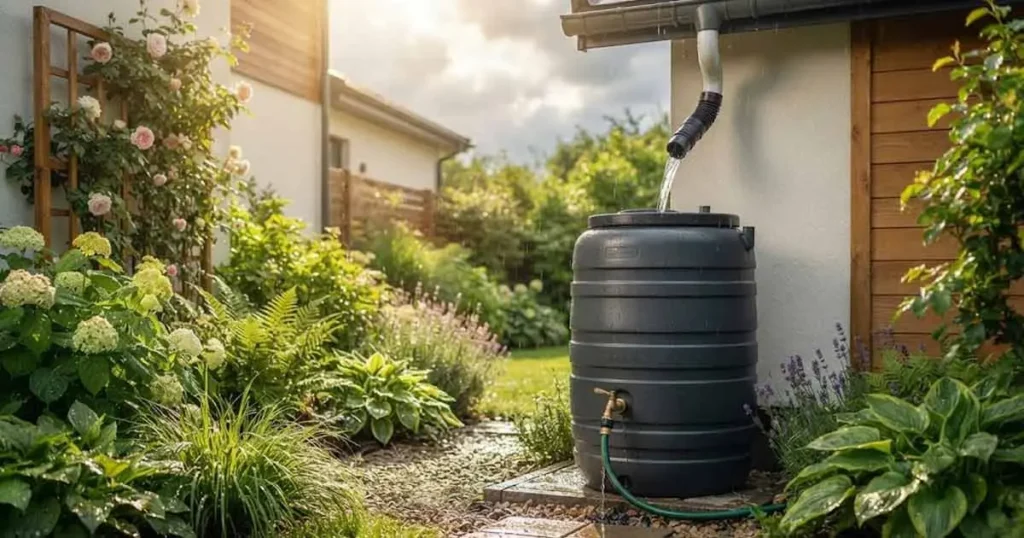

The collection of rainwater is permitted in Indiana and the state has no limitations on the use of rainwater for ordinary residential purposes. A rain barrel or cistern can be installed under a downspout by a homeowner without any permit, registration or state review. The practice is encouraged by the Indiana Department of Environmental Management and the state’s building code only applies to larger systems when they are connected to a residence for non-potable water.
Key Takeaways
- It is legal to collect rainwater in Indiana. There is no state law that prohibits residents from installing rain barrels or cisterns for their own use.
- Normal household collection has no volume restriction or permit.
- The Indiana Residential Code 2020 Chapter 29 discusses non-potable rainwater catchment and distribution systems installed within a home.
- Ordinary rain barrels are not likely to be the focus of any closer scrutiny, but larger or commercial-scale systems may be subject to closer scrutiny to ensure they don’t interfere with existing water users.
- There is no statewide rain barrel rebate program in Indiana, however some cities and utilities are offering rain barrel rebates, such as West Lafayette.
Can You Collect Rainwater in Indiana?
Yes. There is no statute that prohibits or limits the use of residential rainwater harvesting in Indiana. A rain barrel, multiple barrels connected together or a larger outdoor cistern can be installed for garden and lawn irrigation without needing approval from any state agency. This is true in all parts of the state, whether in a city, suburb or rural area.
The average annual rainfall in Indiana is about 42 inches. The average 1,200 square foot roof produces approximately 635 gallons of run-off during a 1″ storm, which is equivalent to filling over 12 standard 50-gallon rain barrels. Most of that water runs off the land right now without being used, which’s why the state is promoting the residents to take some of it for irrigation.
Rules for Basic Rain Barrels in Indiana
Most homeowners can easily follow the practical rules.
- Rain barrel or cistern for outside irrigation is exempt from permit.
- There is no limit on the amount of rainwater that can be stored by a home.
- Collected water can be used for all landscaping, lawns and gardens.
- A sealed or screened barrel will not be considered a mosquito breeding site.
The water law in Indiana is based on the general water law concept of the state, which considers reasonable use of rainfall on private land to be an ordinary use rather than a use that must be authorized by a state permit, as is the case in some western states.
When Indiana’s Rainwater Rules Apply
The greater the size and the intended use of a system, the greater the regulatory interest in it in Indiana, but not just because it is a rain catchment system.
| Situation | Requirement in Indiana |
| Rain barrel under a downspout for outdoor use | No permit needed |
| Outdoor cistern used only for irrigation | No permit needed, regardless of size |
| System plumbed indoors for non-potable use | Must follow Chapter 29 of the Indiana Residential Code |
| Very large or commercial-scale systems | May require review to confirm no interference with other water users |
| Drinking water use | Requires treatment and filtration to safe drinking water standards |
Chapter 29 of the 2020 Indiana Residential Code provides a clear structural standard for non-potable rainwater catchment and distribution systems that provide water for use within a home, such as for toilet flushing. The purpose of this code chapter is to assure good construction and safety, and it does not prevent a homeowner from collecting rainwater in the first place.
Indiana’s water resource system may require more detailed consideration by state officials for commercial or very large systems, especially those that are large enough to take a substantial amount of water from a shared source. Rain barrels and garden cisterns used in a typical home are not in the realm of relevance here.
Local Rules, Zoning and HOA Considerations
While state law provides the bottom line, local rules can also be important. Some municipalities have zoning or land-use regulations for larger rain barrels or above-ground tanks, and homeowners associations may have their own guidelines for visible rain barrels due to aesthetic concerns. The City of West Lafayette has taken a different approach, selling rain barrels through a rain barrel rebate and education program. There is no statewide incentive program like this in Indiana, and rebates are available based on location. The best way to determine if there are any extra requirements is to inquire of the local water utility or planning office before setting up a larger system.
Also Read: Is It Illegal To
Why Indiana Encourages Rainwater Harvesting
Indiana’s supportive stance is not just a lack of regulation. The Indiana Department of Environmental Management (DEM) sees rainwater harvesting as a viable solution for both the household and the water system. Cities in older Indiana can benefit from the reduction in water volume that goes to storm drains during heavy rain events when rooftop runoff is diverted into a barrel, which can help alleviate the strain on the aging city drainage systems and the erosion and localized flooding caused by sudden runoff. The benefit for homeowners is more direct. A rain barrel can help offset some of these summer watering costs because rain water that would otherwise go unused in a storm drain is captured and used elsewhere in the home.A rain barrel can help reduce some of the watering costs for the summer season when lawn and garden watering is at its peak, without any alteration of water rights or legal standing for the household.
This dual benefit, both reducing the load on municipal stormwater and reducing a household’s water bill, is why Indiana state and local guidance always encourages the use of rain barrels, and never views them as a catch-up item. It also provides an explanation of why several cities in the state of Indiana have opted to implement their own rebate programs without the state having implemented one.
How Indiana compares to other states
Indiana is in the middle range of states that do not have volume limits on residential rainwater collection. California, Texas, Florida, Ohio, Georgia, Tennessee, Virginia, Arizona, Michigan and Oregon also fall into this permissive category. Colorado is the obvious exception, where 2016 legislation limits residential collection to 110 gallons, and where the collection rate has been essentially zero for decades. See our US rainwater collection guide for the complete state-by-state information, or check out the state-specific rules for California, Texas, Florida, Ohio, Georgia, Colorado, Oregon, and Michigan.
Conclusion
There’s no significant obstacle between a homeowner and a rain barrel in Indiana. There is no rainwater-specific ban, no volume cap, and no permit requirement for ordinary residential use of rainwater in the state, and the building code is not designed to limit who can collect rainwater, it’s designed to help them build safely. The only variables are local, such as HOA rules, municipal zoning, and whether or not the city has a rebate program. A simple rain barrel only requires a downspout and a place in the yard; homeowners with larger or indoor-plumbed systems should check with local officials. See our full rainwater collection guide for comparisons to other states.
Frequently Asked Questions
1. Can rainwater be collected in Indiana?
No. It is legal to collect rainwater in Indiana. There is no state regulation that prohibits people from using rain barrels or cisterns for personal purpose, and there are no permits required for typical residential systems.
2. What is the maximum size of a rain barrel that can be installed in Indiana?
No. A typical rain barrel or outdoor cistern for irrigation does not need to be registered or permitted by the state. Permits and building code compliance are largely limited to systems that are connected inside building structures.
3. How much rainwater can be collected in Indiana?
There is no state mandated volume limit for residential rainwater collection (from a single barrel to a larger cistern).
4. Is it legal to drink rainwater in my home in Indiana?
Yes, for uses other than potable water, as long as the system complies with Chapter 29 of the Indiana Residential Code. For safe drinking water standards, the drinking water must be treated and filtered.
5. Are there rain barrel rebates available in Indiana?
While there are no statewide incentives, some cities and utilities provide local incentives. For instance, West Lafayette’s water utility has offered rain barrels for sale as a local rainwater program. Call local utility to find out about current offers.
6. In Indiana, can my HOA place limitations on my rain barrel?
Yes, potentially. Rain barrels are not prohibited by state law, but may be limited by aesthetic or placement requirements of homeowners associations. Check your HOA covenants prior to installing a visible system.