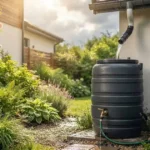

It is legal to collect rainwater in Georgia and the state actively promotes it. Rain barrels or cisterns can be installed under the roof downspout by homeowners without a permit or state review. The Georgia Rainwater Harvesting Act was enacted in the state to discuss the practice formally and today the state has moved beyond just allowing collection, and provides a tax credit for equipment that qualifies. The rules are primarily intended for use with indoor applications and larger plumbed systems and not for a typical backyard barrel.
Key Takeaways
- Rainwater harvesting is allowed in Georgia. No state legislation limits rain barrels or home harvesting.
- In 2010, the Georgia Rainwater Harvesting Act was passed to officially remove barriers for the installation of rainwater harvesting systems for homeowners, businesses and nonprofits.
- Rain barrels for outdoor irrigation do not need to be registered or permitted in the state.
- Georgia Code 48-7-40.29 provides a state income tax credit for rainwater harvesting equipment that meets certain criteria.
- Rainwater cannot be used for drinking unless it’s treated, and rainwater plumbing systems must comply with the state’s rainwater recycling plumbing code.
The history of the Rainwater Harvesting law in Georgia
The state has experienced many droughts in the last 20 years, forcing Georgia to adopt a proactive stance on rainwater harvesting and remove the issue from a legal gray zone. Georgia enacted changes to the International Plumbing Code in 2009 that included a separate appendix for rainwater recycling systems. In 2010, the Georgia Rainwater Harvesting Act was passed, which provided a clear and concise path for the installation of water collection systems by homeowners, businesses and nonprofit organizations with minimal administrative hurdles. That position has never been taken away or limited by legislation, and the state has kept updating its guidelines, rather than imposing new limits.
Rules for Basic Rain Barrels in Georgia
For the average homeowner, Georgia’s rules are simple.
- A rain barrel or cistern that is used for outdoor irrigation does not need a permit or registration.
- There is no state-imposed volume limit. The number of barrels or size of the cistern can be as many as the property owner desires.
- Collected water can be used for any lawn or garden irrigation.
- A sealed or screened design is expected to keep mosquito breeding to a minimum, in keeping with general nuisance and health codes.
The average amount of rainfall in most parts of Georgia is about 50 inches annually, which means that a standard rain barrel fills up frequently. The working overflow diverter is the most important practical consideration, not a legal one.
Georgia’s Rainwater Tax Credit
One of the more incentive friendly states for rain water harvesting is Georgia. Georgia Code 48-7-40.29 provides a state income tax credit for homeowners who install an EPA WaterSense or other water-efficient system, including a rainwater harvesting system. The credit is usually 25 percent of the cost of the equipment, up to a maximum of $2,500, whichever is less, for the taxable year the system is purchased, with the exception of the taxable year the system was installed.The credit is usually 25 percent of the cost of the equipment, up to $2,500, whichever is less, for the taxable year in which the system is purchased, except for the taxable year the system is installed. For those who wish to install more than what they have, it is important to remember to keep records of the equipment purchased and verify that the equipment meets current eligibility requirements, as eligibility requirements may change over time.
Plumbing Code Rules for Indoor and Larger Systems
Georgia draws a clear line between simple outdoor collection and systems that are plumbed into a building. Georgia’s plumbing code was amended in 2009 to include the design and installation guidelines for systems that the state refers to as rainwater recycling systems, which are used to provide water for non-potable purposes like clothes washing and toilet flushing. These standards cover the type and size of collection surface, filter, storage tank construction and cross-connection prevention required to maintain rainwater plumbing separate from the home’s potable water system.
| Situation | Requirement in Georgia |
| Rain barrel under a downspout for outdoor use | No permit needed |
| Cistern used only for irrigation | No permit needed, regardless of size |
| System plumbed indoors for non-potable use | Must follow the state’s rainwater recycling plumbing code appendix |
| Drinking water use | Requires treatment and filtration to safe drinking water standards |
| Local ordinance in specific cities or counties | May add requirements beyond state code |
It is legal to drink collected rain water only when treated. The state’s guidance always distinguishes between non-potable outdoor and household uses, and potable uses, as the rooftop runoff may contain bacteria from birds, insects, or debris.
Local ordinances that may apply
The base requirements are established by state law in Georgia; cities and counties may impose additional requirements. Atlanta’s storm water ordinance mandates that storm water control strategies be integrated into the first inch of storm water on any new or redevelopment project, and this can make rainwater harvesting a requirement, not an option. Coastal Georgia’s stormwater management ordinance, which applies to Chatham County, permits rain barrels only on private property and places a general requirement on the rain barrels to have a mesh or other covering to prevent them from becoming a mosquito breeding site, according to county environmental officials. If you’re installing more than a simple barrel, you should consult your city or county government because the rules are more complex.
Also Read: Is It Illegal To
How Georgia Compares to Other States
Georgia is in the same “no limit” category as most of the rest of the country. Residential rainwater collection is permitted in California, Texas, Florida, Ohio, Indiana, Tennessee, Virginia, Arizona, Michigan, and Oregon, without any statewide volume restriction, and several of these states, such as Georgia, Texas, and Arizona, offer tax incentives. Colorado is the only state that still has a near total ban on residential collection, with a 2016 law limiting collection to 110 gallons. See our US rainwater collection guide for the full state-by-state breakdown, or check out the rules for California, Texas, Florida, Ohio, Colorado, Oregon, and Michigan.
Conclusion
Georgia is a very optimistic state with regard to rainwater harvesting. The Georgia Rainwater Harvesting Act and the plumbing code changes that accompanied it eliminated any legal ambiguity over 10 years ago, and Georgia’s tax credit is one of the most aggressive in actively encouraging rainwater harvesting. If a homeowner is installing a simple rain barrel for their garden, they are not required to get approval from the state. If you are thinking of installing a larger cistern, an indoor plumbed system, or drinking water should you follow the plumbing code appendix and check with any local ordinance first. See our full rainwater collection guide for comparison to other states.
Frequently Asked Questions
1. Is it legal to store rain water in Georgia?
Yes. Rainwater collection is legal in GA. The Georgia Rainwater Harvesting Act, and the 2009 plumbing code amendments, officially pave the way for residential and commercial systems, and a simple rain barrel requires no permit.
2. Do I need a permit to install a rain barrel in Georgia?
No. A cistern or rain barrel for use in an outdoor irrigation system does not need a state permit or registration. Permits and code compliance only apply to systems that are plumbed indoors and not for potable water.
3. What is the recommended treatment for drinking rainwater in Georgia?
Not without treatment. Rainwater on untreated roofs can contain bacteria and contaminants, so Georgia’s guidelines say that rainwater can only be used for non-potable purposes (like irrigation and flushing toilets) unless it is filtered and treated to meet safe drinking water standards.
4. Is there a tax credit for harvesting rainwater in Georgia?
Yes. Georgia Code 48-7-40.29 allows homeowners to take a state income tax credit of 25 percent of the cost of the equipment up to $2,500 when they buy a qualifying water-efficient system, which may include rainwater harvesting equipment.
5. Do there exist any local rules in addition to Georgia’s State law?
Yes. Local governments have the option of imposing additional requirements. The stormwater ordinance in Atlanta requires stormwater management as part of the onsite stormwater compliance for new development; Chatham County has also implemented a requirement for rain barrels to be on private property and covered to reduce the risk of mosquito breeding. Before installing a system, be sure to follow local rules.
6. How much rainwater can I collect in Georgia?
There are no state imposed limits on the amount of rainwater that can be collected at a residence, no matter how small or large the rainwater collection system is.