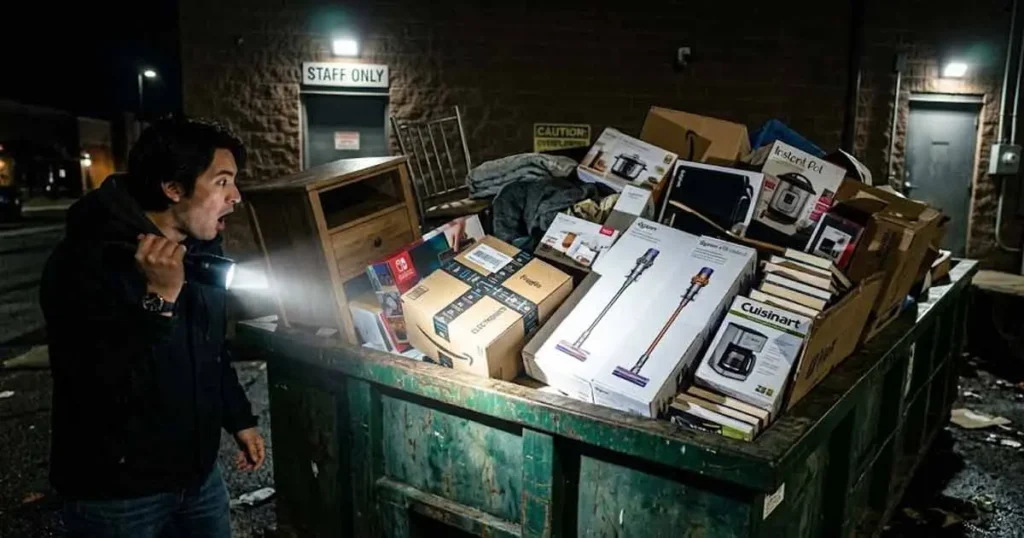

Not at the state level, no, dumpster diving isn’t illegal in New Jersey. Basically, dumpster diving is not illegal in New Jersey. This is partly because there is no state law prohibiting dumpster diving. But, the legality of it, depends on the circumstances in which it is done and the place in which it is done. Local New Jersey county or municipal ordinances may prohibit actions related to dumpster diving. What sets New Jersey apart from the other states in this series is that its strict defiant trespass law, the special “peering” provision which adds to the legal exposure beyond the regular trespass, and the specific theft statute which takes effect once items are removed without permission from private property.
Key Takeaways
- In essence, dumpster diving is not illegal in New Jersey. This is in part due to the fact that there is no single state law against dumpster diving. But, it is legal under certain conditions and in certain locations.
- In New Jersey, a trespassing charge is regarded as a petty disorderly persons charge. This may lead to a fine of up to $500 and up to 30 days jail, although first-time offenders are less likely to be jailed.
- New Jersey’s “peering” provision is unique. Glancing into windows or other private areas, without permission, adds to the violations. Warnings have legal force in the state’s defiant trespass provision.
- N.J.S.A. 2C:20-3 provides that in New Jersey, it is considered theft to take anything from another person’s dumpster without consent.
- Cities in New Jersey have different local regulations. Newark has anti-scavenging ordinance in its vicinity to the airport district. Taking from bins that are marked for recycling is not allowed in Jersey City. There are few specific ordinances in Trenton.
- Can you “dumpster dive” Sephora in New Jersey? Typically, Target stores and other large stores store dumpsters on private property, which is off limits unless you are given permission. It’s the same story for Sephora stores in New Jersey’s approximately 70 shopping malls.
- Restrictions on dumpster diving are one of the states’ issues, and urban areas are aggressively enforcing anti-scavenging laws, along with California and Florida.
What New Jersey State Law Says About Dumpster Diving
Another reason for which dumpster diving is not per se illegal is a decision of the U.S. Supreme Court from 1988. The Court determined that dumpster diving is not a violation of anyone’s right to privacy, since a person who leaves his trash in a public place for collection does not have a reasonable expectation of privacy in it. Instead, when the trash is on the street of a public road or another location open to the public, the preceding owner has relinquished ownership. If it is of any value to another person, he or she can take it.
There is no state law in New Jersey prohibiting dumpster diving; trespassing on private property is illegal throughout the state. Diving is safe in public areas such as curbside garbage collection areas when garbage is at the curb.
According to the dumpster diving laws in New Jersey, a person has ownership of the waste as long as it is on their private property. However, as soon as the trash is moved to public property, they lose all the rights of ownership of that trash. So, whenever trash is being transported to public garbage collection units, it is entirely safe to dive in.
Defiant Trespass and the Uniqueness of the “Peering” Provision in the Trespass Framework in New Jersey
When a person attempts to access a dumpster, or other container, that is located on private property, a diver may be committing trespassing when he/she approaches the container. The majority of dumpsters behind retail stores or construction sites are on private land. Under New Jersey law, entering a property, particularly when designated by “no trespassing” signs and/or a fence, can be a crime.
In New Jersey, the penalties for dumpster diving depend on the crime. A trespassing violation is considered a petty disorderly persons offence. This can lead to a fine of up to $500 and jail sentences of up to 30 days, though that is less frequently for first time offenders.
New Jersey allows dumpster diving in public areas but has a very strict trespass law (New Jersey Statutes 2C:18-3). New Jersey concentrates on opening up homes, not on taking away items. The defiant trespass provision in the state law gives warnings legal effect. If told to leave, do so and do not re-enter.
One of the unique legal hazards that exists in New Jersey is for anyone who dives close to building windows or other private viewing areas. New Jersey’s “peering” provision is unique. Intruding into windows or private areas, without permission, is a further violation. Dive-busters should not be seen “surveying” buildings. For example, while accessing a nearby dumpster, a Ocean City or Hoboken diver could be charged an additional fee that is not found in most other states in this series that have a similar ordinance.
Theft Statute: N.J.S.A. 2C:20-3
This is a legal distinction between New Jersey and some of its neighboring states.
In New Jersey, taking items from someone else’s dumpster without permission is deemed theft under N.J.S.A. 2C:20-3 that covers the unlawful taking of property. The items are still considered to be the property of the person or business who discarded them until they are disposed of properly. It is important for dumpster divers to know that it is illegal to take things from private dumpsters without permission, otherwise they could be charged with theft and other lawsuits.
The statutory framing is important because it establishes a new route to theft in addition to trespass exposure, as established in Virginia. The owner of a property in New Jersey does not have to establish trespass in order to file a lawsuit against a diver who takes objects from a private dumpster.
City-by-City New Jersey Rules: Newark, Jersey City, Trenton, Hoboken, and Beyond
Newark
Newark has anti-scavenging regulations in the area surrounding the airport district. Because of its close proximity to Newark Liberty International Airport, the city of Newark has enacted additional regulations on scavenging activities, in addition to the general trespass laws in effect throughout the state, that are geared toward security concerns.
Jersey City
Taking from bins for recycling is limited in Jersey City. In an urban setting such as Jersey City, it is particularly important to know of any city ordinance that could impact dumpster diving. The City’s recycling-specific restriction follows the trend of other cities such as San Francisco and Fort Wayne that have restrictions on scavenging that are specific to the recycling stream.
Trenton
There are few specific ordinances in Trenton. New Jersey’s state capital does not have specific legislation against dumpster diving, but instead follows the general statewide trespass and theft laws.
Hoboken
Dumpster diving is allowed here, but trespassing is not allowed here in Hoboken and can lead to trouble. So, always dumpster dive at public properties.
Paterson and Elizabeth
Paterson, NJ is a place where dumpster diving is permitted, just as it is in Newark and Jersey City. The emphasis is on not trespassing on private land and respecting any municipal ordinances that may exist. Dumping of trash into dumpsters in Elizabeth, NJ is not prohibited, as long as the divers are not on private property or breaking local laws.
Is Dumpingster Diving at Sephora in NJ illegal?
This is more complicated in shopping centers and retail areas. Target stores and other large stores typically have dumpsters on private property which are not allowed to be accessed without permission.
With over 6,605 stores and more than 70 shopping malls, New Jersey is one of the best places to go shopping for dumpster diving enthusiasts. Sephora stores in these malls and shopping centers are on private commercial property just as are stores at Target and other retailers.
The risks associated with Sephora dumpster diving in New Jersey are:
- A minor disorderly persons trespass charge with a $500 fine and/or up to 30 days imprisonment
- If Sephora disputes the abandonment of particular items, it can file a theft charge under N.J.S.A. 2C:20-3.
- A permanent ban on a mall or store, resulting in a future visit as criminal trespass exposure
- Enforcement of anti-scavenging ordinance if site is near the airport district.
- In March 2025, Sephora’s corporate policy was confirmed, stating that there will be no dumpster diving.
For commercial properties, you can end up banned from that store or mall for diving into their dumpster without permission. The criminal charges against you will be extra.
The Four Core Legal Risks in New Jersey
1. Defiant Trespass
A NJ petty disorderly persons offense that can carry up to $500 in fines and 30 days in jail.
2. Theft Under N.J.S.A. 2C:20-3
Whether or not there is trespass, it is considered theft to take anything from another person’s dumpster without permission.
3. The Peering Provision
It is an extra trespass to look into windows or other private areas without permission while on property.
4. Local Ordinance Violations
Beyond the statewide system, Newark’s airport-district anti-scavenging ordinance, Jersey City’s recycling bin ordinance and other city-specific measures provide extra exposure. If a person does not commit trespass or criminal mischief, he or she could have legal issues due to local laws. There are ordinances in place for waste disposal and collection in many towns and cities throughout New Jersey.
Under New Jersey law, there are things you can and cannot do
In general, it is legal in New Jersey:
- Diving into dumpsters on public property, such as those placed for curbside pickup
- Removal of items from public garbage collection units after garbage has been placed on public property.
- Dumpster diving on private property with owner’s permission
- Diving at night with a dumpster (same legal restrictions as diving during the day)
Generally, it’s illegal in New Jersey:
- Defiant trespassing when entering upon private property without permission in order to gain access to a dumpster.
- Breaking glass, fences or locks to gain access to a dumpster
- Stealing from a private dumpster (N.J.S.A. 2C:20-3)
- Looking through windows or in private areas when accessing a nearby dumpster
- Taking materials from recyclables bins, specifically in Jersey City
- Scavenging in the area of Newark’s airport district, which is prohibited by anti-scavenging rules in the city.
How New Jersey differs from other states
New Jersey’s defiant trespass law is among the strictest in the series, along with a special peering law and a specific theft statute.
| State | State Law | Key Local Rules | Max Trespass Penalty |
| New Jersey | No statewide ban; defiant trespass under 2C:18-3; theft under 2C:20-3 | Newark airport-district rules; Jersey City recycling restrictions | Up to $500 fine and 30 days jail |
| Virginia | No statewide ban; Section 18.2-119 trespass; Section 18.2-95 theft | Richmond and Fairfax County litter rules; Virginia Beach discourages | $500-$2,500 fine for illegal dumping |
| Utah | No statewide ban; UCA 76-6-206 class B misdemeanor | Layton and Orem dedicated dumpster diving bans | Up to $1,000 fine or jail |
| Arizona | No statewide ban; trespass fines up to $2,500 | Phoenix and Tucson time restrictions; Scottsdale and Mesa stricter rules | Up to $2,500 fine |
| Missouri | No statewide ban; Statute 569.140 trespass | Kansas City, St. Louis, Springfield, Columbia, Joplin local rules | Up to 6 months jail and $500 fine |
| Michigan | No statewide ban; trespass statute applies broadly | Detroit $500 fine ban; Warren junk peddler license; Ann Arbor outright ban | Up to $500 fine plus possible prison |
| Florida | No statewide ban; Section 810.09 trespass | Miami-Dade $500 fines; Orlando and Tampa ordinances | Up to 60 days jail and $500 fine |
| California | No statewide ban; Section 602 trespass | LA and SD scavenging ordinances; SF recycling restrictions | Up to 6 months jail and $1,000 fine |
California, New Jersey and Florida have the most restrictions, and urban areas in these states are actively implementing anti-scavenging laws. New Jersey’s peering provision and dedicated theft statute combine to provide a multi-layered legal structure that sets it apart from this group of more-restrictive states.
Also Read: Is It Illegal to Dumpster Dive in Kansas
The hazards associated with dumpster diving in New Jersey
Dumpster diving can also be a danger to those who put their trash and other junk in dumpsters. Police officials advise against throwing away any kind of paperwork or other documents that offer personal information, including Social Security numbers, that could put anyone who picks them up at risk of identity theft.
- Sharp objects and bacteria: Always wear gloves, sturdy shoes and protective clothing to prevent cuts, infections and exposure to hazardous materials when dumpster diving.
- Legal liability for privacy violations: Bank dumpster retrieval of sensitive documents results in identity theft charges or other legal liability for privacy violations.
- Physical hazards: There are physical hazards that can be found at construction sites, including debris and other construction-related items, which can be dangerous if they are not handled properly.
- Humid summers in New Jersey speed up the decomposition process of food and organic waste in enclosed commercial dumpsters.
Expert and Legal Perspectives
As the nation’s leading attorney matching service, LegalMatch, which publishes verified legal analysis, says there is no New Jersey state law that prohibits dumpster diving, and the safest way for a diver to not be involved in any potentially criminal activity is to ensure the dumpster is in a location that is easily accessible to the public. In particular, their analysis highlights that experts in the field warn that throwing away documents that include personal information like Social Security numbers is a bad idea because it makes an easy target for identity theft for both the thrower and anyone who gets the documents.
According to the updated legal analysis resource DumpsterQuest, there is no state law in New Jersey that prohibits dumpster diving, but local ordinances and property rights can create a complex legal situation that every dumpster diver must understand. In particular, their analysis points out that Target stores and other large retailers typically maintain dumpsters on private property, which are not accessible without permission. This is applicable to Sephora stores in New Jersey’s many shopping malls.
Dumpster diving is permitted in public spaces in New Jersey, but the law is quite strict on those who dare trespass as per LegalOverview, a comprehensive dumpster diving legal resource updated March 27, 2026, and New Jersey is regarded as one of the states with the most restrictions on dumpster diving, along with California and Florida, where urban areas are actively enforcing anti-scavenging laws.
Also Read: Is It Illegal To
Conclusion
The state of New Jersey does not have a law against dumpster diving. There is no single state statute that prohibits dumpster diving, and the 1988 California v. Greenwood Supreme Court decision sets a federal floor for dumpster diving and curbside collection areas across the state. Elizabeth, Trenton, and Hoboken all say that diving is allowed under the same conditions as the rest of the state, but not if divers trespass, and only if they follow municipal regulations.
The state of New Jersey has a complex and unique legal exposure for all divers. Defiant trespass is a petty disorderly persons offense in New Jersey with a fine of up to $500 and a jail sentence of up to 30 days. N.J.S.A. 2C:20-3 establishes a theft avenue for goods taken out of private dumpsters without permission. The NJ peering provision presents another risk to divers when they stay near building windows to gain access to dumpsters nearby. New Jersey is singled out as one of the strictest states in this series, joining California and Florida, because of exposure to the anti-scavenging ordinance in the city of Newark and the recycling ordinance in the city of Jersey City.
The safest way to dumpster dive in NJ is to only access dumpsters in truly public places like the curbside collection site, not near windows or private viewing areas of buildings, check with your municipality’s code before diving, and seek explicit permission from the building owner before accessing any commercial dumpster.
To see if dumpster diving is legal in the country, check out Is It Illegal to Dumpster Dive?
Frequently Asked Questions
1. Would it be illegal to dumpster dive in New Jersey?
Not in state. No state law in NJ prohibits dumpster diving. Generally acceptable on public property and on curbside collection areas. Defiant trespass is a petty disorderly persons offense, however, according to New Jersey Statutes 2C:18-3, and N.J.S.A. 2C:20-3 provides separate theft exposure for items taken from private dumpsters.
2. What is New Jersey’s special “peering” provision?
New Jersey law also makes an additional privacy violation when looking into windows or other private spaces without permission. This also means that the trespass liability of dumpster divers who wait near building windows to gain access to a nearby dumpster could be an additional expense to the standard trespass liability, which is not confirmed in most other states in this series.
3. Can you get in trouble for dumpster diving in Newark or Jersey City?
Newark has anti-scavenging regulations in particular in the vicinity of the airport district. Taking from bins that are labeled for recycling is limited in Jersey City. The other major cities have similar statewide laws regarding access to public property for diving, and access to unauthorized private property, otherwise.
4. Is it legal to dumpster dive at Sephora in NJ?
The majority of Sephora stores in New Jersey, especially in the state’s approximately 70 shopping malls, are situated on private commercial property. Without permission, you can face a petty disorderly persons trespass charge and theft charges under N.J.S.A. 2C:20-3 if you enter their dumpster. It is the corporate policy of Sephora that dumpster diving is not allowed in Sephora stores, confirmed in March 2025.
5. If you trespass while dumpster diving in New Jersey, what is the punishment?
A trespassing violation is a petty disorderly persons offense, punishable by a fine of up to $500 and up to 30 days in jail, but jail time is less likely for first time offenders.
6. What is the legal and safe way to dumpster dive in NJ?
Only enter dumpsters in truly public areas like trash collection areas when the trash is actually being collected. Don’t stand by the windows of buildings or other private viewing spaces to avoid peering violations. Before doing so, be sure to review your municipality’s code, especially in Newark and Jersey City. Always ask permission from property owners before entering any commercial dumpster.