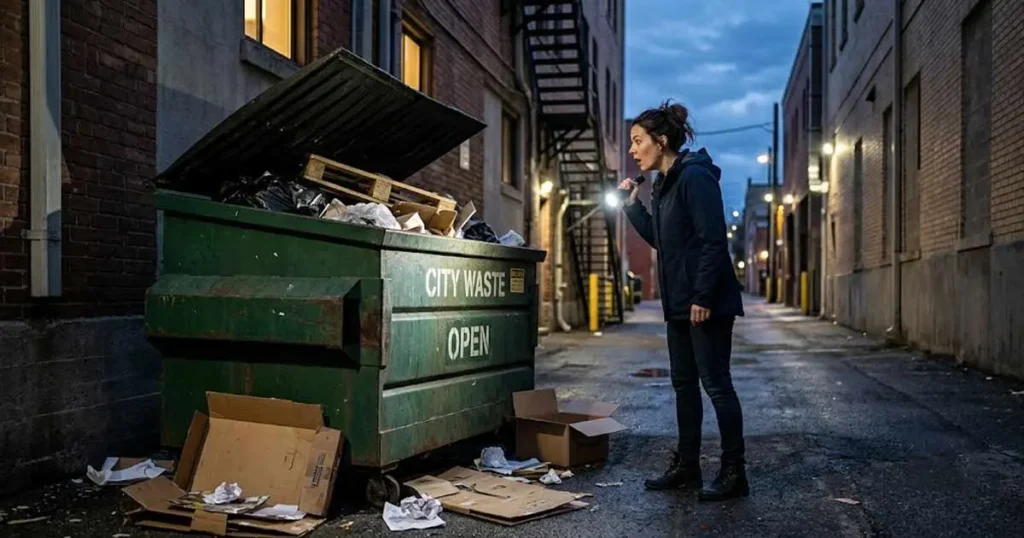

No, state-wide dumpster diving is not illegal in Utah. Dumping is not a state crime in Utah but may be a local ordinance or private property regulation. Utah does not have a specific dumpster diving law. Abandoned property is trash that is left in public places or in dumpsters that are accessible. The reason the Utah framework is unique is that two cities have enacted specific bans on trespass, in Layton and Orem, which are more specific than the general trespass framework that most other cities in the state use, and also because of one of the more clearly defined trespass penalty frameworks in this entire series.
Key Takeaways
- Utah state law generally permits dumpster diving, as the Supreme Court determined that there is no expectation of privacy in trash collected from a dumpster. There is no statewide ban and you can dive into residential bins at the curb or public commercial dumpsters without theft charges.
- Accessing fenced, gated, or signed private property is considered trespassing under Utah Code Section 76-6-206 and is a class B misdemeanor punishable by up to $1,000 and/or jail time.
- There are also certain laws that prohibit dumpster diving within the city limits in some cities in Utah, including Layton and Orem. City of Layton ordinance 4-2-5 and city of Orem code 5-1-1 forbid the unauthorized rummaging through solid waste containers and may result in theft or trespassing charges.
- In some places Unified Police patrol hotspots and fine $300-$500 per incident.
- It is legal to dumpster dive at night in Utah. Diving dumpsters by day or at night, the rules are the same.
- Is it illegal to dumpster dive at Sephora in Utah? The majority of Sephora stores are on private commercial property. If you access the dumpsters without permission you could be subject to trespass fines of up to $1,000 in violation of Utah Code Section 76-6-206, which is a Class B misdemeanor.
- Typical places to find legal dumpster diving sites are schools, grocery stores, department stores, and student housing areas (where trespass is not a problem).
According to Utah State Law, dumpster diving is legal
Utah has adopted the ruling in California v. Greenwood and, therefore, the contents of a dumpster are fair game once put out for collection on public access areas.
The classic United States Supreme Court case California v. Greenwood holds that the owner of goods has relinquished all ownership rights over goods placed in public dumpsters nationwide.
In Utah, trash is considered abandoned property if it is not in your home, and it is generally not considered theft to take the trash. Access to dumpsters may not be done by trespassing on private property, which may result in arrest. Some municipalities may have laws against dumpster diving or limiting access to commercial dumpsters. The collection of waste or damage to property during dumpster diving is not allowed.
The main legal question in Utah regarding dumpster diving is whether it constitutes trespassing or infringes on property rights. The majority of dumpsters are found on private property such as businesses, apartment complexes, or private homes. Don’t assume that an item in a dumpster is free to take and you could be liable for legal repercussions if you’re caught trespassing when trying to reach a dumpster.
Utah Code Section 76-6-206: The Primary Legal Risk
The downside: trespassing on gated or fenced private property or on private property signed off, is a class B misdemeanor, punishable by up to $1,000 or jail time.
Utah is in the middle of the pack in this series, with a maximum exposure of $5,000, which is lower than the maximums of $5,000 in Indiana and $2,500 in Arizona, but higher than the base fine of $50 in Tennessee.
Private Property: It is illegal to dumpster dive on private property without permission. If you’re caught on private property, you could be asked to leave, or law enforcement could issue a citation or arrest you.
In the state of Utah, all corporations and private homes are deemed to be private property, and trespassing is punishable against the owner by dumpster diving without permission. Searching through the dumpster while it is on the private property of a Utah resident may be considered trespass or theft.
In addition to the common trespass law, Utah has a special Trespass after Warning statute. Keep in mind Utah’s Trespass after Warning law, as well as local ordinances and good sense. If you approach a private property and you can see a No Trespassing sign, you may be committing trespassing and the Utah business can ban you from their property permanently.
City-by-City Utah Rules: Layton, Orem, and Beyond
Layton
Rummaging in solid waste receptacles without permission is prohibited by Layton city ordinance 4-2-5, and the person rummaging could be charged with theft or trespassing.
Layton’s ordinance is among the most explicitly-stated municipal dumpster-diving bans recorded in this state series. Layton is one of the best examples of a city that has gone beyond the general trespass concept to establish a specific ban on the activity itself.
Orem
Theft or trespassing may be charged for rummaging through solid waste containers without permission, as prohibited by Orem city code 5-1-1.
Orem’s ordinance follows in the footsteps of Layton, and is the second known town in the state to ban dumpster diving. The two cities are located along the Wasatch Front corridor, the most densely populated area in the State of Utah, indicating that the regulation of scavenging may be becoming more stringent in Utah as a whole.
Other Utah Cities
There is no law in Utah that bans dumpster diving. Trash diving may be prohibited in your city or county, on the other hand. Therefore, be sure to review the city code for each municipality, which is readily available online.
Some cities in Utah may have regulations that prohibit people from passing through business dumpsters or from disturbing trash in zones that are designated for commercial trash. Outside of the city of Layton, and the cities of Orem and West Valley City, the sources for 2025-2026 are not specific, so the cities are likely subject to Utah’s general trespass law, Section 76-6-206.
Is Dumpingster Diving at Sephora in Utah illegal?
The majority of Sephora stores in Utah are located in shopping centers or commercial strips on private property. This is why most businesses and apartment complexes have their dumpsters locked or in a restricted area.
When dumpster diving, if you do cause a mess or litter, you may be breaking littering or public nuisance laws.
The risks involved with Sephora dumpster diving in Utah are:
- Trespass: Utah Code Section 76-6-206 is a class B misdemeanor that can be fined up to $1,000 or imprisoned up to one year.
- If the store is in Layton or Orem, violation of the city ordinance that bans rummaging through commercial waste containers.Unified Police patrol enforcement in some hotspot areas, $300 – $500 per incident
- A lifetime ban on the property if a No Trespassing sign is posted and violated.
- As reported in March 2025 at Sephora’s Beauty Insider Community, the company has a policy against dumpster diving.
Chains may now be locking bins, but retail hot spots such as Walmart or apartment complexes provide food and goods. Police respond to owner calls, giving trespass warnings/citations.
The Four Core Legal Risks in Utah
1. Criminal Trespass
The offense is a class B misdemeanor punishable by up to $1,000 and/or jail time under Utah Code Section 76-6-206.
2. Municipal Ordinance Violations
There are laws in place in both Layton and Orem that prohibit dumpster diving in their city limits and anyone who does will be charged with theft or trespassing.
3. Littering and Public Nuisance
Littering is a criminal act in Utah and dumpster diving without picking up the trash may result in fines or other legal consequences.
4. Theft
It is illegal to remove items from a locked dumpster or fenced area. Also, if a business takes in recyclables that are solely for resale, some jurisdictions in Utah may consider this to be theft.
What is legal and illegal in Utah?
The following is generally legal in Utah:
- Limiting dumpsters to public property, such as schools, grocery stores, department stores, and student housing areas, provided that they are accessible without trespassing.
- Residential trash bins at the curb (usually accessible after trash is taken out for collection)
- Dumpster diving on private property with express written permission of the owner
- Dumping at night time, with the same legal restrictions as dumping during the day.
In Utah, it is illegal to:
- Entering private property to obtain dumpsters.
- Uncontrolled access to solid waste containers in Layton or Orem
- Access to fenced off or locked dumpsters
- When a permanent trespass ban is issued, the person may be barred from returning to the property.
- Not cleaning up after using the dumpsters or making messes while looking for items
- Taking shredded mail or sensitive personal documents, which can cause theft perception problems;
Utah’s ranking and comparison to other states
Utah has a moderate stance in this series, as it has no statewide ban, two confirmed dedicated municipal bans and a class B misdemeanor trespass charge.
| State | State Law | Key Local Rules | Max Trespass Penalty |
| Utah | No statewide ban; UCA 76-6-206 class B misdemeanor | Layton and Orem dedicated dumpster diving bans | Up to $1,000 fine or jail |
| Arizona | No statewide ban; trespass fines up to $2,500 | Phoenix and Tucson time restrictions; Scottsdale and Mesa stricter rules | Up to $2,500 fine |
| Missouri | No statewide ban; Statute 569.140 trespass | Kansas City, St. Louis, Springfield, Columbia, Joplin local rules | Up to 6 months jail and $500 fine |
| Michigan | No statewide ban; trespass statute applies broadly | Detroit $500 fine ban; Warren junk peddler license; Ann Arbor outright ban | Up to $500 fine plus possible prison |
| Florida | No statewide ban; Section 810.09 trespass | Miami-Dade $500 fines; Orlando and Tampa ordinances | Up to 60 days jail and $500 fine |
| Iowa | No statewide ban; Iowa Code 716.7 trespass | No confirmed city-specific bans in major cities | Varies by degree |
| Tennessee | No statewide ban; TCA 39-14-405 trespass | Nashville and Knoxville commercial restrictions | Up to 30 days jail and $50 fine |
| Indiana | No statewide ban; IC 35-43-2-2 Class A misdemeanor | Indianapolis minimal; Fort Wayne recycling restrictions | Up to 1 year jail and $5,000 fine |
| California | No statewide ban; Section 602 trespass | LA and SD scavenging ordinances; SF recycling restrictions | Up to 6 months jail and $1,000 fine |
| Alabama | No statewide ban; trespass fines up to $500 | Birmingham and Montgomery commercial restrictions | Up to 3 months jail and $500 fine |
| Texas | No statewide ban; Section 9.41 force justification | Austin and San Antonio scavenging restrictions | Up to 180 days jail and $2,000 fine |
The $1,000 maximum class B misdemeanor fine is the same as the ceiling in California, and the two cities that have confirmed dedicated municipal bans (Layton and Orem) are among the more clearly documented examples in this series of cities that have moved beyond general trespass enforcement to activity-specific prohibition.
Some dangers exist that are specific to dumpster diving in Utah
Divers should wear protective clothing (gloves) and not disturb hazardous materials.
- Winter conditions: Utah has cold winters and heavy snowfall, especially in the Wasatch Front area, which makes enclosed metal dumpsters very cold and access areas prone to ice.
- I think it’s a little unsafe to be scavenging trash at night in residential neighborhoods, there is a chance that a cop will be called and trash diving late at night brings in a much larger amount of people.
- Sharp objects: Before going in a dumpster, inspect for sharp objects, broken glass or hazardous materials.
- Glass, needles, rot are hazards. Use a buddy, lights and an exit plan.
Also Read: Is It Illegal To
Expert and Legal Perspectives
According to World Law Digest, a legal reference publication reviewed by licensed attorneys, there is no state law in Utah that expressly prohibits dumpster diving and all waste dumped in public places or accessible dumpsters is deemed to be abandoned property. Their analysis notes that local cities may have ordinances banning dumpster diving or restricting access to commercial dumpsters, and that getting permission for private dumpsters is the best way to stay legal.
A Utah legal analysis tool that analyzed the state’s dumpster diving laws in detail notes that Layton city ordinance 4-2-5 and Orem city code 5-1-1 specifically prohibit rummaging through solid waste containers without permission, and therefore potential charges of theft or trespassing could be brought against those who violate the laws. This is one of the most specific and verifiable municipal ordinance citations in any state in this series of dumpster diving.
According to Rebel Express, which published detailed Utah dumpster diving legal analysis updated April 2026, Unified Police in some areas police hotspots and charge $300 to $500 per dumpster dive, and repeat offenses can be taken to court, which may damage records. Their analysis also concludes that there are no laws that prohibit dumpster diving outright in Utah, but that anti-vagrancy efforts have increased the level of scrutiny of the practice.
Conclusion
The state of Utah does not have a law against dumpster diving. Utah Code does not explicitly prohibit dumpster diving, and the 1988 Supreme Court decision in California v. Greenwood sets the federal minimum standard for allowing dumpster diving on public property and restricting curbside residential bins.
Every Utah diver should be aware of the state’s class B misdemeanor trespass law, which allows for up to $1,000 in fines and jail time for trespassing on private property, per Utah Code Section 76-6-206. Layton and Orem are leading the way in this statewide series with specific, named ordinances that explicitly ban unauthorized access to solid waste containers, Layton city ordinance 4-2-5 and Orem city code 5-1-1. Under Utah’s Trespass after Warning law, any property owner can declare any subsequent visit by a diver to be a more serious criminal trespass if they have posted a single warning.
The most legally safe method of dumpster diving in Utah is to only dive on public property, residential curbside bins, or areas that are open like schools, student housing areas, etc. (where it is not considered trespassing), and if diving in Layton and Orem, specifically check their city codes; and if diving in any commercial dumpster, ask for explicit permission from the property owner.
See the national law on dumpster diving at Is It Illegal to Dumpster Dive?
Frequently Asked Questions
1. Can you dumpster dive in Utah?
Not on state level. There is no state law prohibiting dumpster diving in Utah. California v. Greenwood precedent: It is generally legal on public property and residential curbside bins. Still, Utah Code Section 76-6-206 states that it is a class B misdemeanor to trespass on private property, with a possible fine of $1,000 or jail time.
2. Are there any cities in Utah that prohibit dumpster diving?
Yes. Rummaging in solid waste containers without permission is expressly prohibited by the City of Layton’s city ordinance 4-2-5 and the City of Orem’s city code 5-1-1. Both of these cities have specific provisions against theft and trespassing, which can be applied to violators.
3. What are the consequences of dumpster diving on private land in Utah?
Utah Code Section 76-6-206 is a class B misdemeanor punishable by fines up to $1,000 or jail time. In some patrol areas, Unified Police ticket drivers are levying fines of $300 to $500 per ticket. If the behavior is repeated, it can get escalated to court.
4. Is it illegal to dumpster dive at Sephora in Utah?
In Utah, most Sephora stores are in commercial properties. It is a trespass under Utah Code Section 76-6-206 to enter upon someone’s trash dumpster without permission. If the location is within the City of Layton or Orem, the City’s specific ordinance prohibiting rummaging in solid waste containers also applies. The company’s policy announced in March 2025 does not allow dumpster diving at its locations.
5. In Utah, can you dumpster dive at night?
Yes. The legal restrictions for night dumpster diving are the same as for day dumpster diving in Utah. But, diving at night in residential areas can bring more scrutiny from law enforcement, and it brings more divers to popular areas.
6. How to legally dumpster dive safely in Utah?
Use only dumpsters located on public land, residential curbside containers, or areas where public access is not required such as schools, grocery stores, and student housing areas. Do not use Layton and Orem unless you check their ordinances. Always inspect fences, gates and signs before approaching a dumpster. Ask the property owner for specific permission to use any commercial dumpster.